Natural stone
Granite
Colors run from near white to almost black, with flecks and movement. It won't melt or blister and needs little upkeep once sealed, which is why it shows up in busy kitchens and rentals.
Granite countertops
The names are a few letters apart, but the materials are not. One is made in a plant, the other is cut from solid rock. Here is how they differ, where granite and marble fit, and how to decide.
 108 five-star reviews on Google4.4 average from all 131 reviews, as of November 2026
Quartz is an engineered stone. Manufacturers combine ground quartz with resin and pigment and press the mix into slabs, so the look stays consistent from one slab to the next. Quartzite is a natural stone: sandstone that heat and pressure underground turned into dense rock, so every slab carries its own veining.
Almost everything else follows from that difference. Quartz doesn't get sealed, but hot pans go on a trivet and it stays indoors. Quartzite gets sealed, varies from slab to slab and is worth choosing in person. Neither one is the right answer for every kitchen, and our team fabricates and installs both.
One more source of confusion: listings sometimes call quartzite "quartz stone," and some engineered products carry names that sound natural. When in doubt, ask one question: was it cut from a block, or made in a plant? The answer tells you how to live with it. Planning a whole room? Our page on kitchen countertops covers the rest of the project.
How the four countertop materials compare on the points that come up most in a Florida kitchen.
| Compare | Quartz | Quartzite | Granite | Marble |
|---|---|---|---|---|
| What it is | Engineered stone: quartz bound with resin | Natural stone | Natural stone | Natural stone |
| Look | Even color and pattern | Marble-like movement, long veins | Wide color range, flecks and movement | Soft, classic veining |
| Slab to slab | Very close to the sample | Each slab differs | Each slab differs | Each slab differs |
| Sealing | None, per manufacturers | At installation, then as needed | At installation, then as needed | At installation, then as needed |
| Hot pans | Trivet every time: heat can mark the resin | Use a trivet as a habit | Won't melt or blister | Use a trivet as a habit |
| Acids like lemon and wine | Wipe up; avoid harsh chemicals | True quartzite resists etching; check the slab | Wipe up spills | Etches: dull spots where acid sits |
| Florida sun | Darker colors can fade; keep it indoors | Not the concern it is with quartz | Not the concern it is with quartz | Not the concern it is with quartz |
| Upkeep | Low: water and mild soap | Low once sealed | Low once sealed | Higher: wipe acids, accept a patina |
| Where it suits | Kitchens, vanities, rentals and multi-unit work | Kitchens, islands, waterfall ends | Busy kitchens, rentals, bar tops | Vanities, fireplaces, baking areas |
Every natural slab is different, so treat the natural-stone columns as a starting point and look at the actual slab before you decide.
Quartz gives you control. You choose a color from the sample, and the countertop that goes in looks like it. That makes it simpler to match a cabinet finish, or to repeat one countertop across several bathrooms or rental units.
The trade-off is the resin that holds it together. Direct heat can mark it, so a trivet goes under every hot pan, and darker colors can lose depth in strong sun, which is why quartz stays inside the house. In return, it never needs sealing.
Our page on quartz countertops covers colors, care and the installed starting price.
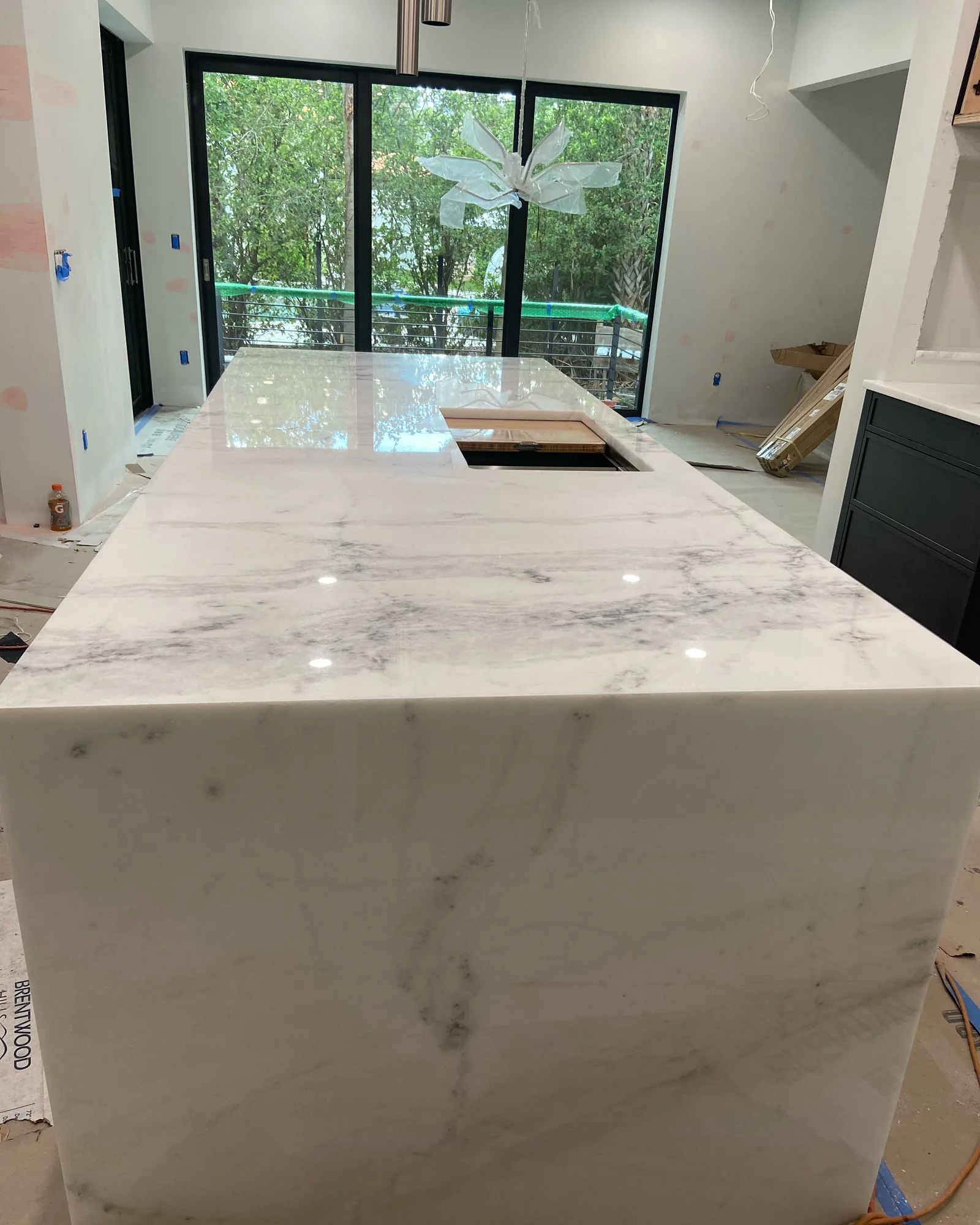
Quartzite carries the soft, sweeping movement of marble in a harder rock that stands up to acids much better. Its veins run across the slab, so two slabs from the same block can still look different on your cabinets.
Because it is natural, you choose the slab itself, not a sample. It gets sealed at installation and resealed when water stops beading. And because trade names vary, check the slab you pick: true quartzite resists etching, while softer stones sold under the same name may not.
More on quartzite countertops, including how we plan the veining on the slab.
Six questions that usually settle it. Answer them honestly for your house, not for a magazine kitchen.
If a slab nobody else has excites you, look at quartzite. If you would rather know exactly what you are getting from the sample, quartz does that.
If trivets are not a habit in your house, keep in mind that quartz needs one every time because of the resin.
A dark quartz near a big sunny window or out on a lanai can fade. In bright spots, a lighter quartz or a natural stone makes more sense.
Quartzite gets sealed at installation and again when water stops beading. If you want nothing on the calendar, quartz needs no sealing at all.
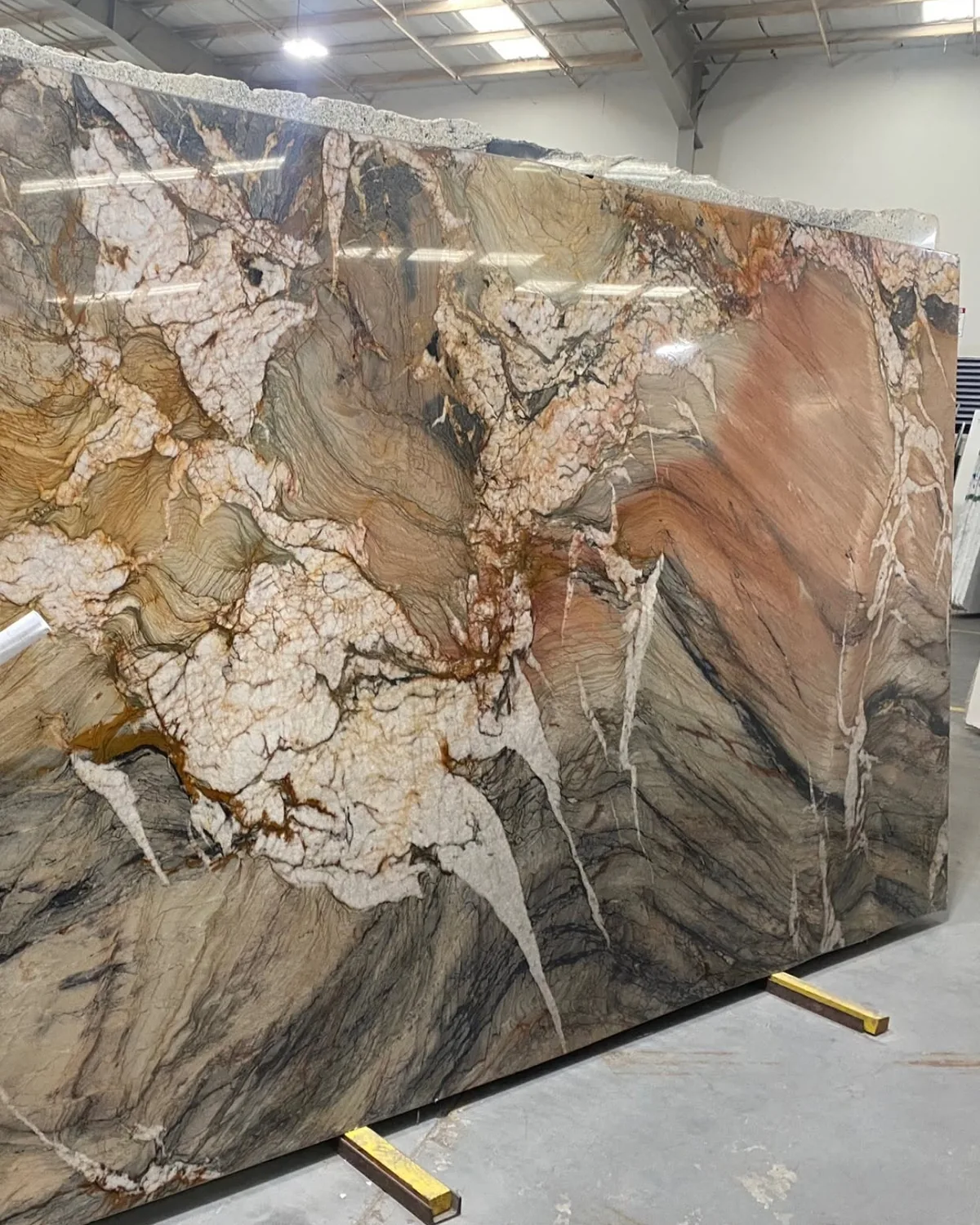
With quartz, a sample is a fair guide. With quartzite, the slab is the product, so plan a visit to choose the one that goes in your kitchen.
For units that should all match, quartz is easier to repeat. For your own kitchen, where the stone is the centerpiece, quartzite gives you the veining.
Two more natural stones belong in the conversation, and they often settle a tie between quartz and quartzite.
Natural stone
Colors run from near white to almost black, with flecks and movement. It won't melt or blister and needs little upkeep once sealed, which is why it shows up in busy kitchens and rentals.
Granite countertopsNatural stone
Soft, classic veining for vanities, fireplaces and kitchens where a patina is welcome. It is softer than quartzite and granite and etches with acids, so it asks for more care.
Marble countertopsNot sure which one? Compare them side by side on the showroom floor, just south of downtown St. Pete.
Bring a cabinet door, a floor sample or photos of the room. Next to a quartz sample, a quartzite slab shows the difference right away. If you want something bolder than either, ask about exotic stone.
Quartz is engineered: ground quartz bound with resin and pigment, pressed into slabs whose look stays even. Quartzite is natural stone, formed when sandstone is changed by heat and pressure, so each slab has its own veining. That one difference drives the rest: sealing, heat, sun exposure and how you pick the slab.
Quartz asks for less routine care: it needs no sealing, and soap and water handle daily cleaning. Quartzite gets sealed at installation and resealed when water stops beading. On the other hand, quartz needs a trivet under every hot pan and should stay out of strong sun. Which one is easier depends on the habits in your house.
Sealing helps quartzite resist stains, and true quartzite holds up to the acids that etch marble. The trouble is the label: a softer stone can be sold under the same name and etch like marble. Test the slab you plan to buy before you commit. On any natural stone, wipe up wine, oil and citrus as soon as you notice them.
For rentals and multi-unit work, quartz is often the practical pick: one color repeats across every unit, and there is no sealing to schedule between tenants. Granite fills the same role among natural stones, with a wide color range. Quartzite tends to suit kitchens where the owner lives and the veining is the point. More on working with builders and property owners.
Yes. Our St. Petersburg warehouse and showroom, on 5th Ave S, has natural stone slabs on the floor and quartz to compare next to them. What is on the floor changes, so phone ahead at (727) 295-2206 if you have a specific stone in mind. We work on both sides of the bay, Tampa and Clearwater included.
Tell us whether you are leaning toward quartz or quartzite and which surfaces are on your list, and we will get back to you about the estimate.

SERVING TAMPA BAY
GRANITE · MARBLE · QUARTZITE · ONYX
(727) 295-22061921 5th Ave S, St. Petersburg, FL
See the whole slab before we cut.