
When homeowners shop for new stone surfaces, one question comes up almost immediately: will there be a seam? If you are planning quartz or granite countertops, the honest answer is usually yes—at least in some kitchens, bathrooms, or larger layouts. Stone slabs are large, but they are not unlimited in size, and room design often makes at least one joint necessary.
Understanding countertop seams Tampa FL homeowners commonly see can make the entire project easier to plan. Seams are a normal part of many countertop installations, but their appearance depends on material choice, slab pattern, layout, edge details, cabinet support, lighting, and installer technique. A well-planned seam should be structurally sound, thoughtfully placed, and as visually subtle as the layout allows.
This guide explains where seams typically go, how visible are countertop seams in real-world installations, and what to consider when planning quartz and granite seams Tampa FL homeowners may encounter in kitchens, islands, bathrooms, and other living spaces.
Why Stone Countertops Need Seams
Natural stone and engineered stone are fabricated from slabs with fixed dimensions. Even when a slab looks massive in a showroom, the finished countertop layout may still exceed its usable size once overhangs, cutouts, backsplashes, corners, and appliance openings are taken into account.
Seams are often necessary for practical reasons such as:
- Long countertop runs that exceed slab length or usable fabrication space
- L-shaped or U-shaped kitchen layouts
- Large islands
- Peninsulas with extended overhangs
- Material handling and safe transport
- Stairways, tight entries, or installation access limitations
- Reducing stress on weak points around sinks, cooktops, or corners
In other words, seams are not automatically a sign of poor quality. In many cases, they are the most responsible way to balance appearance, strength, and safe installation.
Where Countertop Seams Usually Go
Stone countertop seam placement Tampa FL projects often follows the same core principles used in quality fabrication everywhere: hide the seam as much as practical, protect the strength of the slab, and work with the room layout rather than against it.
1. Near a Sink or Cooktop Cutout
This can surprise homeowners, but seams are sometimes placed near sink or cooktop areas because those cutouts naturally interrupt the visual field. A seam may be less noticeable there than in the middle of an uninterrupted expanse of stone. However, this has to be balanced carefully, since cutouts also create stress points and require good support and precise fabrication.
2. At Inside Corners on L-Shaped Counters
L-shaped kitchens are one of the most common reasons a seam is needed. Rather than trying to force a large, fragile L-shaped piece into place, fabricators often split the layout into sections and place the seam near the corner. This can improve transport and reduce the risk of breakage.
3. Along Long Straight Runs
If the countertop run is longer than a slab can accommodate, a seam may be placed on a straight section. In the best cases, the seam is aligned where it looks balanced and avoids drawing attention. Veining direction, cabinet layout, and nearby lighting all matter.

4. On Large Kitchen Islands
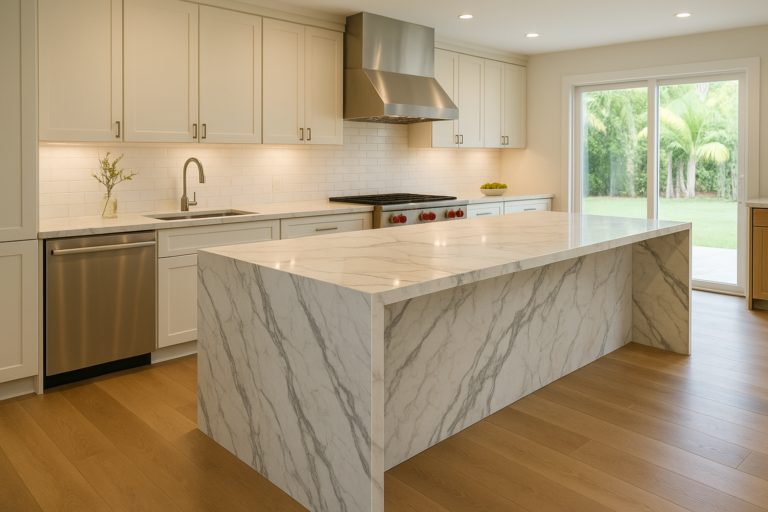
Some islands can be fabricated from a single slab, while others need a seam because of width, length, or both. Waterfall edges, mitered details, and dramatic vein matching can also influence where the seam belongs. Island seams often receive extra scrutiny because the surface is highly visible from multiple angles.
5. Around Appliance or Cabinet Breaks
A seam may be easier to disguise where the eye already expects a transition, such as near a range, dishwasher gap, cabinet division, or change in depth. The goal is not to make the seam disappear completely, but to place it where it feels natural within the design.
How Visible Are Countertop Seams?
The question how visible are countertop seams has no one-size-fits-all answer. A seam is usually visible if you know where to look, especially in certain lighting. The real goal is not invisibility, but minimization. A quality seam should be flat, tight, color-matched as closely as possible, and located where it does not dominate the room.
Seam visibility often depends on several factors.
Material Pattern
Solid colors, fine-grain patterns, and uniform quartz designs can sometimes make seams easier to control visually because the fabricator has a more consistent field to work with. On the other hand, very plain surfaces may reveal even slight changes in level or reflection.
Bold veining can be either forgiving or demanding. If the veining is carefully matched, the seam may blend nicely. If the pattern shifts abruptly, the joint can become more obvious.
Color Choice
Very dark materials can reveal reflective changes at the seam under strong lighting. Very bright whites may show adhesive tone differences if the color match is imperfect. Mid-tone patterns often offer a balanced result, but much depends on the exact product.
Finish Type
Polished surfaces reflect more light, which can sometimes make even tiny seam variations easier to notice. Honed or leathered textures may soften reflections, but they introduce their own visual characteristics. The finish can affect how the seam catches the eye from different angles.
Lighting Conditions
Tampa, FL homes often receive abundant natural light, and that matters. A seam that looks subtle in a showroom may be easier to spot in a bright kitchen with side lighting or sunlight crossing the surface. Under-cabinet lights, pendant lights, and windows can all highlight or soften a seam.
Installer Precision
Even excellent materials can look poor if the seam is misaligned, too wide, or poorly filled. Precise fabrication and installation are critical. A strong result usually includes:
- Tight seam width
- Careful surface leveling
- Thoughtful adhesive color matching
- Pattern alignment where possible
- Proper support beneath the countertop
Quartz vs. Granite Seams
Both materials can have attractive, well-executed seams, but there are differences in how they are planned and perceived.
| Factor | Quartz | Granite |
|---|---|---|
| Pattern consistency | Often more uniform, depending on design | More natural variation from slab to slab |
| Vein matching | Important on marble-look quartz and directional patterns | Important on bold natural movement and exotic slabs |
| Seam visibility | Can be subtle, but plain colors may show reflective changes | Natural movement can help disguise seams, though color shifts may stand out |
| Slab variation | Usually more predictable within a product line | Unique natural features require slab-specific planning |
| Planning focus | Color match, pattern flow, and finish reflection | Natural fissures, movement, grain, and slab character |
For quartz and granite seams Tampa FL homeowners are considering, the best material is not simply the one with the “least visible seam.” It is the one that suits the room, performs well for the household, and allows a layout that looks intentional.
What Makes a Good Seam?
A good seam is not defined by the unrealistic standard of being impossible to find. Instead, it should meet both structural and visual expectations.
Well-executed seams are typically:
- Flat: One side should not sit noticeably higher than the other.
- Tight: The gap should be narrow and neat, not wide or uneven.
- Color-matched: Adhesive should coordinate as closely as practical with the stone.
- Strategically placed: The seam should respect the room layout and the slab’s strengths.
- Properly supported: Cabinets and substrate conditions should help keep the seam stable over time.
It is also important to understand that natural stone has inherent variation. Granite, in particular, may contain movement, crystal structure, pits, fissures, or directional grain that affect how a seam reads to the eye. These are not necessarily flaws; they are part of the material.
How to Plan Seam Placement Before Fabrication
Homeowners often focus on color and edge profile, but seam planning deserves just as much attention. Discussing seam placement early can reduce surprises later.
Review the Layout Carefully
Ask where seams are likely to be needed based on your kitchen or bath configuration. Long runs, corners, oversized islands, and waterfall edges should all be part of the discussion before fabrication begins.
View the Actual Slab if Possible
This is especially useful for granite and other natural stone products with strong movement. Seeing the slab can help you understand where the most active pattern areas are and how a seam might affect the visual flow.
Talk About Vein Direction
For quartz with marble-like veining or for dramatically patterned granite, direction matters. The best seam location may depend on how the pattern travels across the countertop and whether bookmatching or vein alignment is possible.
Ask About Access and Installation Constraints
Sometimes the ideal seam on paper is not the safest option in reality. Doorways, elevators, staircases, turns, and cabinet conditions can all affect what can be transported and installed without damaging the slab.
Consider the Most Visible Viewing Angles
Think about where people stand in the room. Is the island seen from the entry? Does sunlight hit one side every morning? Is a seam at eye level from the dining area? These practical observations can influence smarter placement.
Special Considerations for Tampa, FL Homes
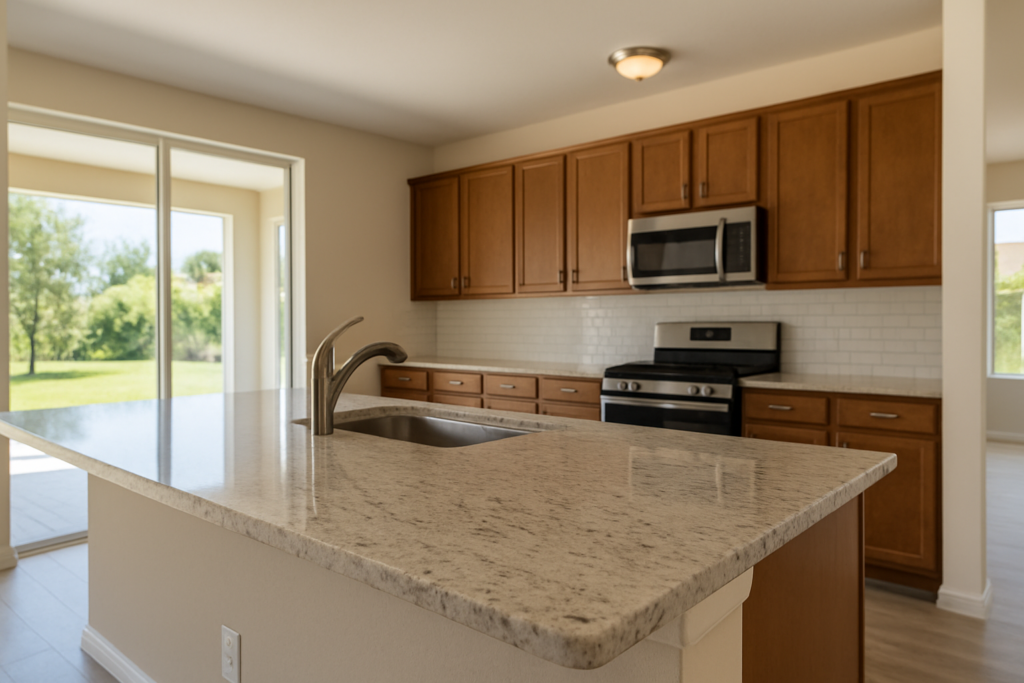
While seam planning principles are broadly consistent, local housing styles and environmental conditions can influence the final result. In Tampa, FL, many homes feature open-concept kitchens, large islands, and bright natural light. All of these can make seam planning more important.
Open Layouts Mean More Visibility
When a kitchen opens into the living and dining space, the countertop is often a major visual focal point. An island seam that might feel minor in a closed kitchen may become more noticeable in an open-plan room viewed from multiple directions.
Strong Natural Light Reveals Surface Details
Sunlit interiors can showcase beautiful stone color and texture, but they can also highlight seam lines and reflections. Planning for window placement and daily light patterns can help set realistic expectations.
Large Islands Are Popular
Bigger islands often create more challenges for single-slab fabrication. If an island requires a seam, placement, pattern alignment, and edge detailing all become especially important because the surface is so exposed.
Common Homeowner Misunderstandings About Seams
“A Seam Means the Countertop Was Poorly Made”
Not necessarily. Many layouts require seams due to slab size, transportation safety, or structural logic. The real question is whether the seam was planned and executed well.
“Quartz Never Needs Seams”
Quartz slabs still have size limitations. Large kitchens, long runs, and oversized islands may still need one or more seams.
“Granite Seams Always Hide Better”
Sometimes they do, especially when natural movement helps break up the joint visually. But a dramatic pattern mismatch can also make a seam stand out more. Every slab is different.
“The Seam Should Be Invisible From Every Angle”
That is usually not realistic. Most seams can be found if you know where to look, especially in reflective light. The professional standard is subtle, well-finished, and structurally sound—not magically nonexistent.
Red Flags to Watch For
While a visible seam is not automatically a problem, some conditions may indicate poor workmanship or installation issues. These include:
- Noticeable height difference between the two sides
- Excessively wide or uneven seam gaps
- Poor adhesive color match
- Misaligned major pattern features when alignment should have been possible
- Rough or messy fill material
- Movement or cracking related to weak support
If you are reviewing plans before installation, it is better to ask questions early rather than after fabrication is complete.
Balancing Beauty, Strength, and Practicality
The best seam plan is usually a compromise between design goals and physical reality. Homeowners naturally want the cleanest possible look, but countertop pieces also need to be fabricated safely, transported without damage, and supported correctly once installed.
That is why stone countertop seam placement Tampa FL projects should be approached as both a design decision and a construction decision. A seam placed in the least visually distracting area may not always be the safest option if it creates weakness around a sink cutout or requires carrying an oversized piece through a tight entry. Likewise, the strongest layout still needs to look cohesive in the finished room.
When seam planning is handled thoughtfully, the result should feel intentional. Most people notice the overall beauty of the countertop long before they notice a properly executed seam.
Conclusion
Seams are a normal and often necessary part of stone countertop installation. The key is not whether a seam exists, but where it goes, how carefully it is fabricated, and how well it fits the material and room design. For homeowners researching countertop seams Tampa FL, it helps to know that visibility depends on stone type, pattern, finish, lighting, and craftsmanship.
Whether you are choosing quartz or granite, planning ahead makes a major difference. Review likely seam locations, think about the room’s most visible sightlines, and understand the natural limits of slab size and handling. With realistic expectations and careful planning, quartz and granite seams Tampa FL homeowners see in finished projects can be subtle, functional, and well integrated into the overall design.