Choosing the right countertop can shape the entire outcome of a kitchen remodel. For homeowners comparing porcelain vs quartz countertops in Tampa, FL, the decision often comes down to more than appearance alone. Heat, humidity, daily use, maintenance expectations, and overall design goals all matter when selecting a surface that will perform well over time.
Both materials have become popular for modern kitchens, and each offers clear advantages. Porcelain is known for its sleek look, heat resistance, and ability to mimic natural materials. Quartz is valued for its durability, consistency, and low-maintenance appeal. If you are weighing a quartz countertop comparison in Tampa, FL against newer porcelain options, this guide will help you understand where each material excels and where tradeoffs may appear.
Below, we will look at performance, design flexibility, maintenance, installation considerations, and how each option fits the needs of Tampa homeowners planning a practical and attractive kitchen remodel.
Why Countertop Choice Matters in Tampa, FL
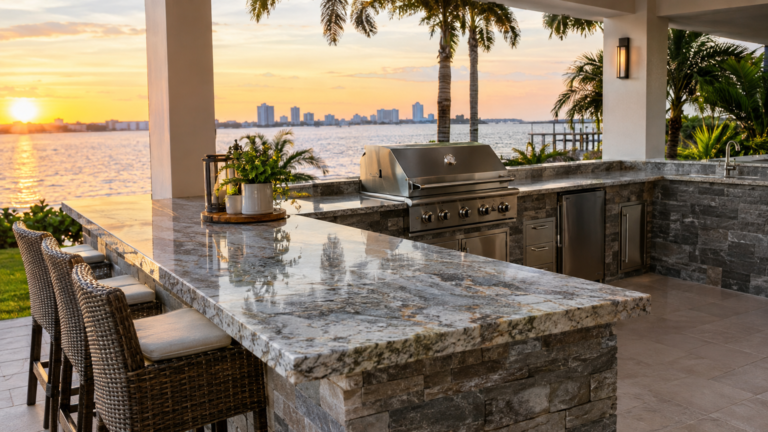
Kitchen surfaces in Tampa homes need to stand up to real life. Busy households, frequent cooking, entertaining, and Florida’s warm climate all influence what makes sense as the best kitchen countertop material in Tampa, FL. While indoor countertops are not exposed to the same conditions as outdoor kitchens, local homeowners often prioritize materials that feel durable, easy to care for, and visually clean in bright, open spaces.
Tampa kitchen remodels also frequently emphasize airy design, coastal-influenced palettes, and open-concept layouts. That means countertop material affects not just function, but the overall tone of the room. A highly patterned slab can become a focal point, while a more uniform surface may support a minimalist style. The right choice should work with cabinetry, flooring, backsplash selections, and how the kitchen is actually used day to day.
What Are Porcelain Countertops?
Porcelain countertops in Tampa, FL have gained attention because they combine modern design with strong performance characteristics. Porcelain is made from refined clay and minerals fired at very high temperatures. The result is a dense, hard surface available in large-format slabs.
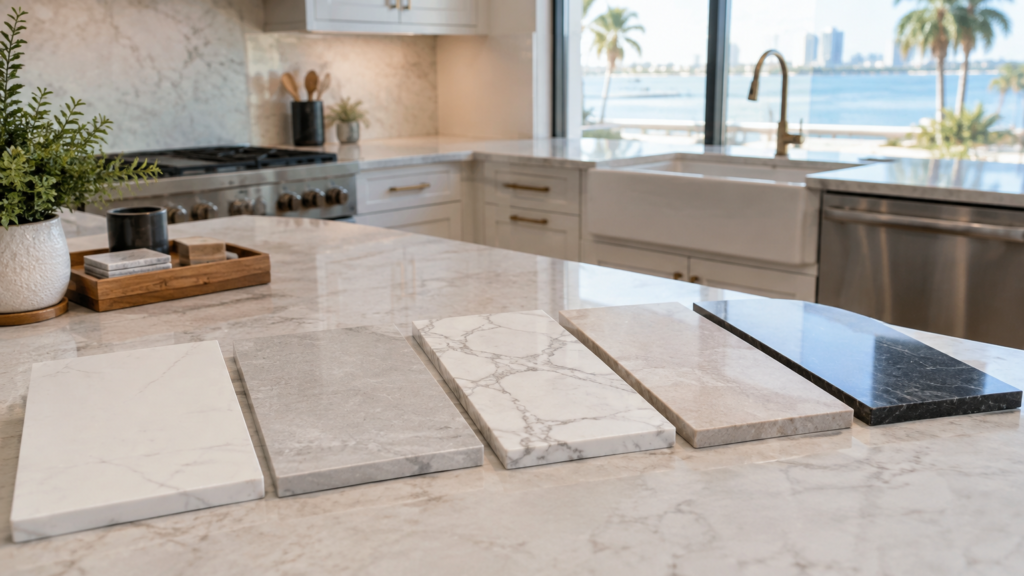
One reason porcelain stands out is its visual versatility. Manufacturers can produce finishes that resemble marble, concrete, limestone, or even metal, often with crisp detail and a contemporary feel. This makes porcelain appealing for homeowners who want the look of natural stone without choosing a more porous material.
Porcelain is also nonporous, which means it resists staining from many common kitchen substances when properly fabricated and installed. It is especially appreciated for heat resistance, making it attractive for serious cooks who want confidence around hot pans and baking dishes.
What Are Quartz Countertops?
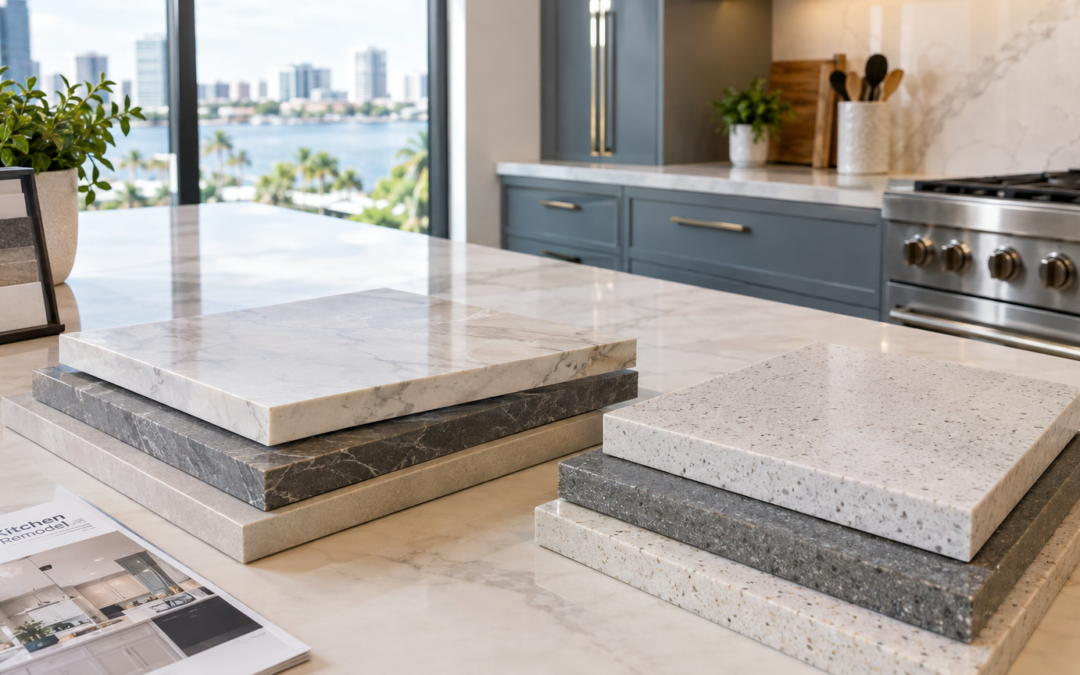
Quartz countertops are engineered surfaces made from natural quartz particles combined with resins and pigments. In a typical quartz countertop comparison in Tampa, FL, quartz is often praised for delivering a polished, upscale appearance with excellent consistency from slab to slab.
Unlike some natural stones, quartz does not need sealing under normal use. Its nonporous surface resists many stains and makes everyday cleanup straightforward. That convenience is a major reason quartz remains one of the most requested materials for kitchen remodels.
Quartz also offers broad design flexibility. Homeowners can choose bright whites, soft grays, marble-look veining, warmer tones, or more dramatic contemporary styles. For people who want a dependable and visually refined countertop with simple upkeep, quartz is often high on the list.
Porcelain vs Quartz Countertops in Tampa, FL at a Glance
| Feature | Porcelain | Quartz |
|---|---|---|
| Heat resistance | Excellent | Good, but direct high heat should be avoided |
| Stain resistance | Excellent when properly installed | Excellent due to nonporous surface |
| Scratch resistance | Very strong surface resistance | Durable, though not immune to scratching |
| Edge and impact sensitivity | Can be more vulnerable to chipping at edges | Generally solid and durable, though heavy impact can still damage it |
| Design consistency | Highly controlled manufactured patterns | Highly consistent engineered appearance |
| Maintenance | Low maintenance | Low maintenance |
| Best fit | Modern, heat-conscious, design-forward kitchens | Busy family kitchens seeking easy care and broad style options |
Durability and Everyday Performance
Porcelain Performance
Porcelain performs very well in kitchens where heat and stain resistance are top priorities. Because it is fired at high temperatures, it handles heat impressively compared with many other countertop materials. It also resists UV exposure better than some engineered surfaces, which can be useful in kitchens with abundant natural light.
That said, durability is not only about surface hardness. Porcelain is strong, but like many rigid materials, it can be more susceptible to chipping along edges if struck hard by heavy cookware or tools. This does not make it fragile, but it does mean fabrication quality and edge design matter.
Quartz Performance
Quartz is known for excellent day-to-day reliability. It stands up well to meal prep, spills, and frequent cleaning. Many homeowners choose quartz because it offers a comfortable balance of strength and convenience without requiring sealing.
However, quartz is not usually the top choice if you regularly place very hot pans directly on the surface. The resins used in quartz can be sensitive to extreme heat, so trivets or hot pads are still recommended. In a practical sense, this is easy for many households to manage, but it is a meaningful difference in the porcelain vs quartz countertops Tampa, FL conversation.
Maintenance and Cleaning
Low maintenance is one of the biggest reasons both materials are popular in kitchen remodeling.
Porcelain typically cleans easily with mild soap, water, and nonabrasive products. Because it is nonporous, it does not generally require sealing. Homeowners should still follow manufacturer and fabricator care guidance, especially for textured finishes or specific edge profiles.
Quartz is similarly easy to maintain. Routine wiping with a soft cloth and gentle cleaner is usually enough for everyday care. Since quartz is nonporous, spills from coffee, oil, juice, or sauce are often easier to manage than on more absorbent surfaces.
For Tampa households balancing work, school, guests, and family routines, both surfaces support a relatively simple cleaning routine. If your main concern is avoiding complicated upkeep, either option can work well.
Design Style and Visual Impact
The look of the countertop often drives the first round of decision-making. In many kitchen remodels, the countertop becomes one of the room’s largest visible design elements, so style should not be treated as secondary.
When Porcelain May Be the Better Design Choice
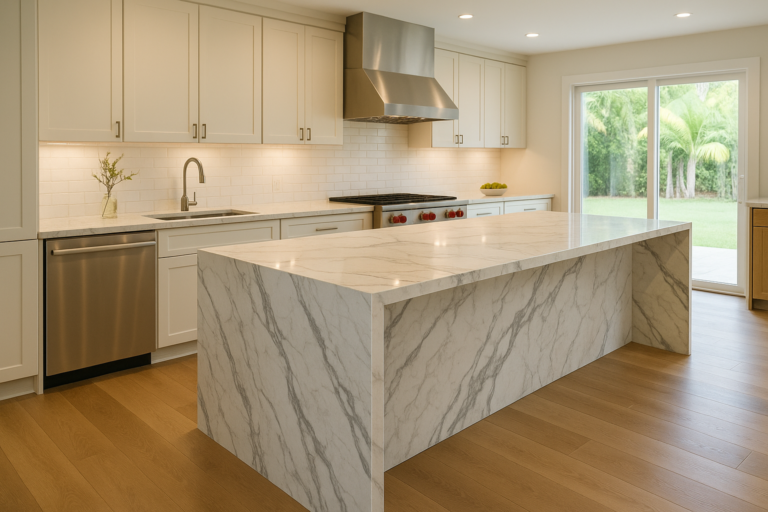
Porcelain often appeals to homeowners who want a sleek, architectural aesthetic. It works especially well in contemporary kitchens with flat-panel cabinetry, waterfall islands, and clean lines. Because porcelain can replicate marble or concrete in a refined way, it fits projects that aim for a sophisticated but modern finish.
It may also be attractive if you want thinner-profile surfaces or coordinated applications beyond the countertop itself. In some remodels, porcelain is used across backsplashes or wall cladding to create a seamless visual effect.
When Quartz May Be the Better Design Choice
Quartz has broad style appeal because it is available in both subtle and statement-making patterns. It can complement transitional, traditional, coastal, and modern kitchens. Homeowners often appreciate the predictability of quartz, especially when they want a clean white kitchen, soft veining, or a uniform surface that feels bright and timeless.
In a quartz countertop comparison in Tampa, FL, quartz often stands out for offering many choices that feel familiar, versatile, and easy to pair with common cabinet colors such as white, navy, gray, natural wood, or greige.
How Tampa Lifestyle Can Influence the Right Choice
Not every kitchen is used the same way, which is why the best answer depends on household habits as much as material specs.
If your kitchen is heavily used for cooking, baking, and setting down warm cookware, porcelain’s heat resistance may be especially appealing. If your household prioritizes convenience, quick cleaning, and a broad range of color options, quartz may be more practical.
Tampa homes also often feature open layouts where the kitchen connects directly to living and dining areas. In those spaces, countertop appearance matters even more because the surface is visible from multiple angles. A dramatic porcelain slab may help create a striking centerpiece, while quartz can deliver a softer, highly livable finish that works well in family-centered designs.
Installation and Fabrication Considerations
Countertop performance is influenced not only by the material itself but also by fabrication and installation quality. This is particularly important when comparing porcelain and quartz.
Porcelain slabs can require specialized handling and fabrication expertise. Because the material can be thinner and behaves differently than quartz or natural stone, proper cutting, support, edge treatment, and transport matter. A well-executed installation is essential to get the appearance and durability homeowners expect.
Quartz is also a professional installation material, but many fabricators and installers have extensive experience working with it due to its long-standing popularity. That familiarity can make design planning and execution feel more straightforward for some remodels.
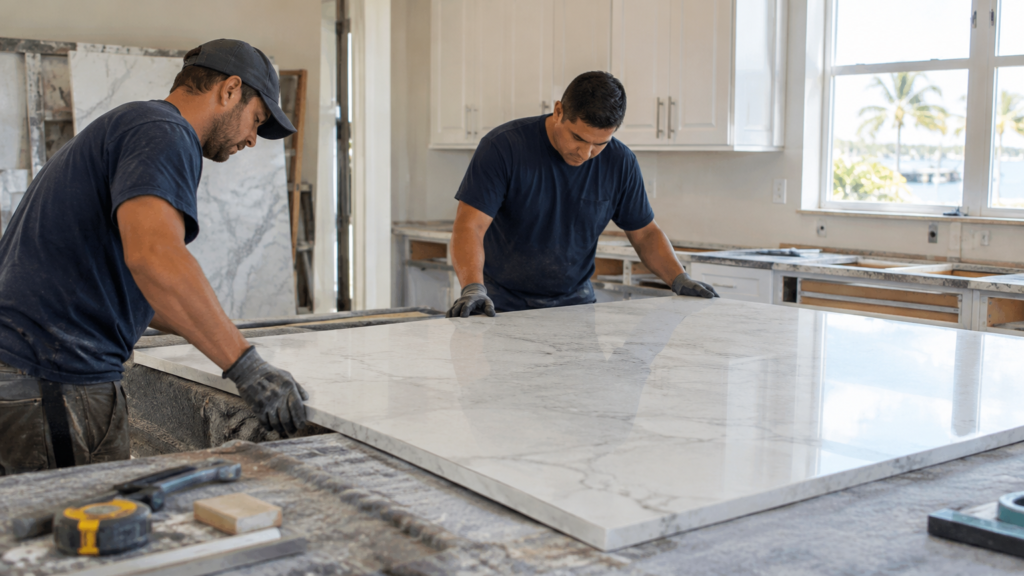
For either option, details such as seam placement, edge profile, sink cutouts, overhang support, and backsplash transitions should be discussed early in the project. A countertop is not just a slab choice; it is a fabrication and installation system that needs to fit the kitchen correctly.
Potential Drawbacks to Consider
No countertop material is perfect, and realistic expectations help homeowners make smarter remodeling decisions.
Porcelain Drawbacks
Porcelain can be less forgiving at corners or edges if hit with a heavy object. Depending on the design, some homeowners also prefer the depth and mass of thicker-looking materials, while porcelain often leans toward a more modern profile. In addition, because porcelain is still a more specialized choice in some markets, material selection and installer experience can be especially important.
Quartz Drawbacks
Quartz performs very well overall, but it is not ideal for repeated direct high-heat contact. Homeowners who frequently cook with cast iron or move hot pans quickly from stove to counter should be disciplined about using protective barriers. Quartz also may not be the first choice for those seeking ultra-thin, highly contemporary slab aesthetics that porcelain often delivers.
Which Material Makes More Sense for Different Kitchen Goals?
Choose Porcelain If You Prioritize:
- High heat resistance
- Modern or European-inspired design
- Thin-profile or minimalist aesthetics
- Large-format, marble-look, or concrete-look visuals
- A surface that performs well in bright, sunlit interiors
Choose Quartz If You Prioritize:
- Easy everyday maintenance
- Consistent color and pattern options
- A proven favorite for busy family kitchens
- Broad compatibility with many design styles
- A balance of durability, beauty, and convenience
When homeowners ask which is the best kitchen countertop material in Tampa, FL, the most honest answer is that it depends on how the kitchen will function. A design-focused remodel centered on heat resistance and sleek aesthetics may lean toward porcelain. A practical remodel built around reliable performance and low-maintenance living may lean toward quartz.
Budget and Long-Term Value Thinking
While exact project costs vary based on slab selection, layout, edge details, sink cutouts, and installation complexity, both porcelain and quartz are generally considered premium countertop materials. Instead of focusing only on initial material price, it is often more useful to think about long-term value.
A countertop that supports your cooking style, cleaning habits, and design preferences is more likely to feel like a good investment over time. Value also comes from choosing a material that fits the home’s aesthetic and reduces future frustration. For example, a homeowner who wants low upkeep may find quartz more valuable in daily life, while someone who loves a modern kitchen and often works with hot cookware may feel porcelain is the smarter long-term choice.
Final Thoughts on Porcelain vs Quartz Countertops in Tampa, FL
Comparing porcelain vs quartz countertops in Tampa, FL comes down to understanding your priorities clearly. Both materials offer strong performance, attractive finishes, and low-maintenance appeal. Porcelain stands out for heat resistance, cutting-edge style, and sleek visual possibilities. Quartz remains a favorite for dependable everyday durability, simple care, and wide-ranging design flexibility.
If you want a crisp, contemporary surface that handles heat exceptionally well, porcelain countertops in Tampa, FL may make the most sense for your remodel. If you want a proven, easy-care surface with broad style options and strong all-around practicality, quartz may be the better fit.
The best remodel decisions happen when material choice matches the way you actually live. By evaluating cooking habits, aesthetic goals, maintenance preferences, and installation quality, Tampa homeowners can make a countertop decision that feels beautiful and functional for years to come.