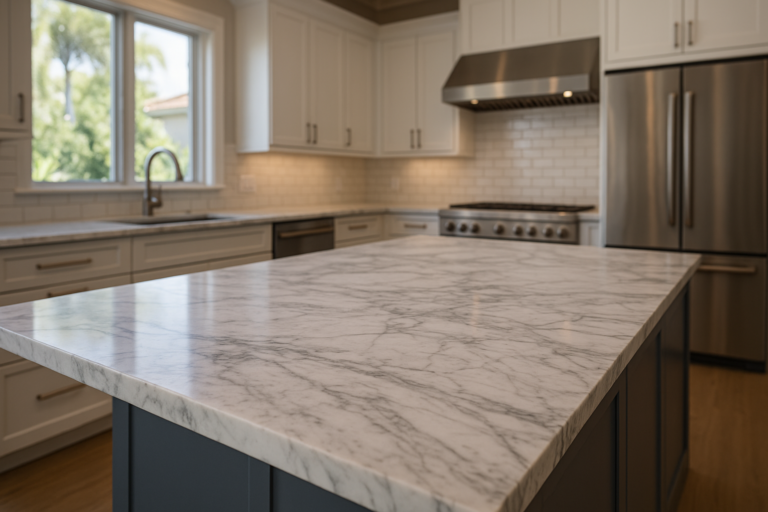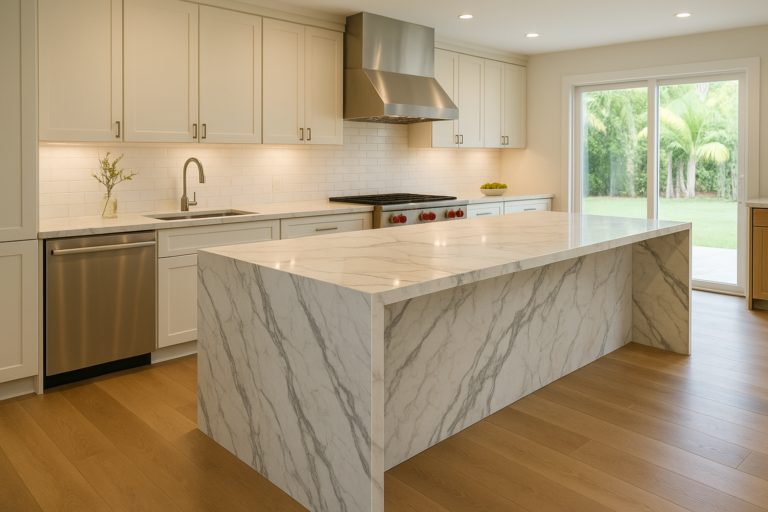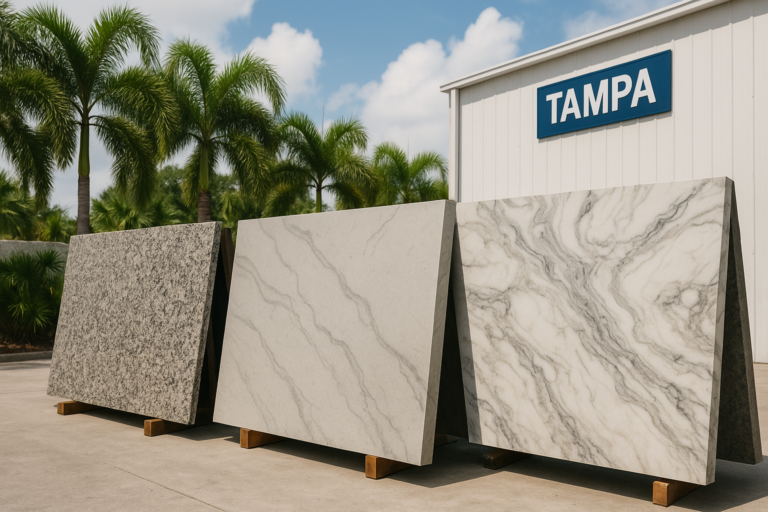
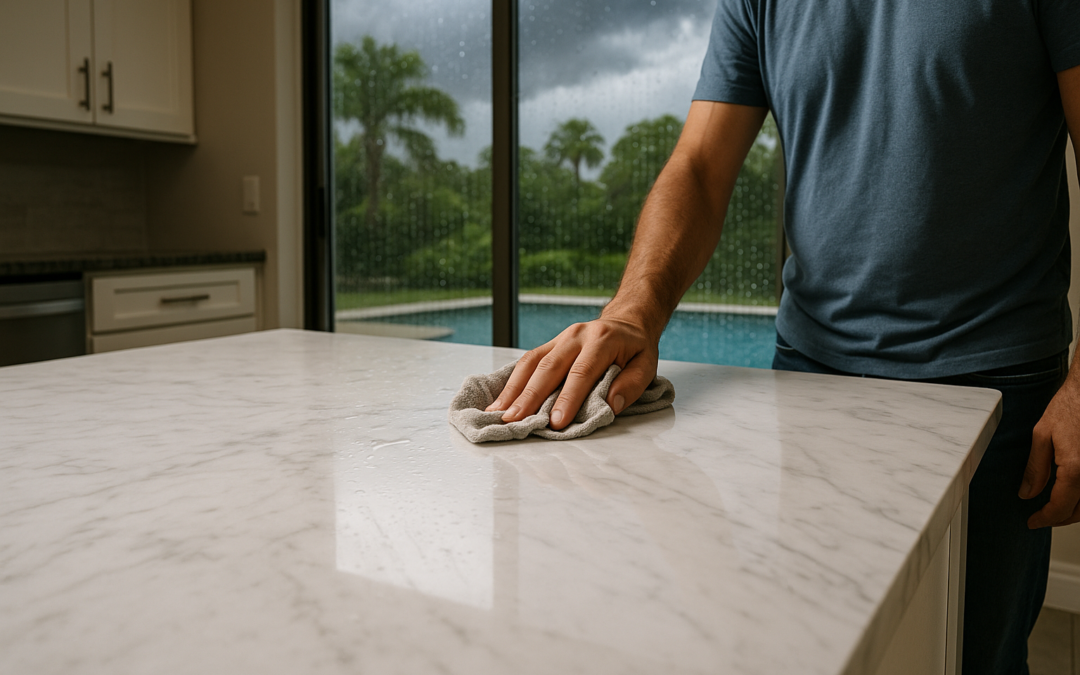
Florida homeowners love marble, granite, quartzite, and other natural stone countertops for their beauty, durability, and timeless appeal. In Tampa, these materials are especially popular in kitchens, bathrooms, outdoor entertaining areas, and vacation properties. But Florida’s climate creates unique challenges that many homeowners do not fully consider until they begin to notice dullness, staining, moisture issues, or damage after a major storm.
Heat, high humidity, salt air near the coast, heavy rain, and hurricane season can all affect how natural stone performs over time. While stone is durable, it is not indestructible. Marble in particular is more porous and more chemically sensitive than many people realize. Understanding the Florida humidity effects on marble countertops and the broader impact of local weather on natural stone can help homeowners protect their investment and keep surfaces looking their best.
This guide explains how Florida heat, humidity, and hurricanes affect marble and natural stone countertops, along with practical steps for natural stone countertop care in Florida.
Why Florida’s Climate Matters for Natural Stone
Natural stone is formed over time under geological pressure and heat, but once it is cut, polished, and installed in a home, it becomes part of the interior environment. Daily use, moisture exposure, cleaning habits, sunlight, and temperature changes all influence how the surface ages.
Tampa’s climate creates a combination of stressors that can accelerate wear if countertops are not maintained properly. These conditions include:
- Consistent heat for much of the year
- High indoor and outdoor humidity
- Frequent air-conditioning transitions
- Intense UV exposure from strong sunlight
- Wind-driven rain and storm season moisture
- Potential flooding or water intrusion during hurricanes
Each of these factors can affect marble and other natural stone surfaces in different ways. Some issues are cosmetic, while others can influence long-term performance.
How Heat Affects Marble and Natural Stone Countertops
Thermal expansion and stress
Stone is generally heat resistant, which is one reason it is a popular countertop material. However, prolonged heat exposure and repeated temperature changes can still create stress. In Florida homes, countertops may experience warmth from sunlit windows, hot cookware, outdoor kitchens, and indoor spaces that fluctuate between air conditioning and higher ambient temperatures.
Natural stone can expand and contract slightly with temperature changes. Over time, repeated movement may place stress on seams, adhesives, and unsupported areas. This is especially important around cooktops, sinks, overhangs, and island edges.
Marble is not usually damaged by warm conditions alone, but sudden temperature extremes can contribute to surface stress. Placing a very hot pot directly on a cool countertop is never a good habit, even with a heat-tolerant stone.
Sunlight and fading concerns
Florida sunlight is intense, and countertops placed near large windows, sliding glass doors, or bright sunrooms can receive strong direct exposure. While many natural stones hold their appearance well, long-term UV exposure can gradually affect sealers and surface finishes. Some stones may also show subtle changes in tone over time depending on mineral composition and finish.
Polished marble and darker stones may reveal these changes more easily because reflected light makes dull spots or uneven wear more noticeable. If one section of a countertop gets stronger daily sun than the rest, uneven aging can develop.
Outdoor stone installations
Outdoor kitchens are common in Tampa, but not every natural stone is equally suited for uncovered exterior use. Heat, rain, UV exposure, and airborne contaminants can all age stone more quickly outdoors than inside. Marble used in an outdoor setting may weather faster, lose polish, or become more vulnerable to staining and etching.
Homeowners planning outdoor countertops should think beyond appearance and consider how the material will perform in direct sun, storm exposure, and regular humidity.
Florida Humidity Effects on Marble Countertops
One of the most important issues for Tampa homeowners is humidity. Marble is a porous natural stone, which means it can absorb moisture and vapors more readily than denser surfaces. Even when sealed, marble still requires thoughtful care in humid conditions.
Moisture absorption and surface changes
High humidity does not usually ruin a marble countertop overnight, but long-term moisture exposure can influence the stone’s appearance and maintenance needs. In kitchens and bathrooms, humid air combines with steam, spills, damp towels, and condensation. This increases the amount of moisture the stone encounters on a routine basis.
Over time, absorbed moisture may contribute to:
- Darkening in localized areas until the stone dries
- Greater susceptibility to staining if spills are left in place
- Reduced sealer performance as protection wears down
- Mildew or musty issues around caulk lines, backsplashes, or sink cutouts
These are not always signs of permanent damage, but they are signs that moisture control and routine maintenance matter.
Humidity and sealer wear
Sealers help slow the absorption of water, oils, and other contaminants, but they are not permanent shields. Florida’s humid conditions can make regular evaluation of the sealer especially important. In a dry climate, a countertop may go longer before needing resealing. In Tampa, where moisture is a year-round concern, wear may become noticeable sooner depending on the stone type, finish, and level of use.
Marble countertop maintenance in Tampa often includes watching for signs that water is no longer beading at the surface or that the stone seems to darken more quickly when it gets wet. These clues can indicate that the protective sealer is no longer performing as well as it should.
Bathrooms and vanity tops face extra exposure
Bathrooms can be particularly challenging because warm showers create steam and lingering humidity in an enclosed space. Marble vanity tops, tub surrounds, and shower ledges are often exposed to cosmetics, soaps, toothpaste, water, and personal care products. In humid air, residue may sit longer before drying, increasing the chance of staining, film buildup, or etching.
Good ventilation can make a major difference. Running exhaust fans, wiping down standing water, and keeping products from pooling on the surface all help reduce humidity-related wear.
How Hurricanes and Tropical Storms Can Affect Stone Countertops
When people think about storm preparation, they usually focus on windows, roofs, and outdoor furniture. Countertops are not always top of mind. However, hurricane prep for stone countertops is worth considering, especially in coastal and storm-prone areas like Tampa.
Water intrusion and flooding
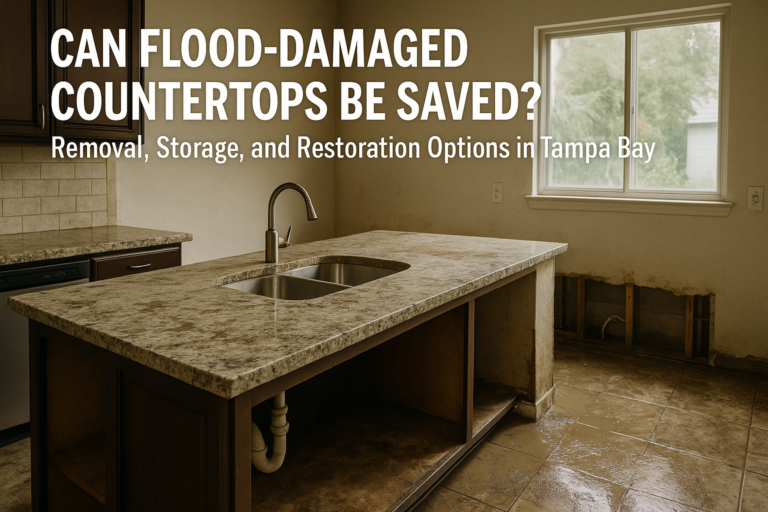
The biggest threat from hurricanes is usually not wind hitting the countertop directly. It is moisture intrusion. Storm-driven rain, plumbing backup, roof leaks, or floodwater entering the home can expose stone surfaces, cabinetry, and substrate materials to excessive moisture.
Natural stone itself may tolerate water better than many other materials, but the surrounding installation can still suffer. Problems may include:
- Water wicking into seams and edges
- Damage to cabinets supporting the countertop
- Weakening of adhesives or caulk in severe conditions
- Staining from contaminated water, dirt, leaves, or debris
- Moisture trapped beneath the stone after flooding
Marble and lighter-colored stones can be especially vulnerable to visible discoloration if floodwater carries organic material, rust, soil, or household chemicals.
Impact from unsecured items
Before a storm, loose household objects can become hazards. In outdoor kitchens, planters, tools, grill accessories, and decor may shift or fall during heavy wind. Inside the home, homeowners may stack supplies on countertops in a rush, increasing the chance of scratches, chips, or staining.
Heavy objects dropped on stone edges can cause cracking or chipping, particularly around corners and sink openings where the slab is more vulnerable.
Extended power outages and indoor humidity spikes
After a hurricane, power outages can leave homes without air conditioning for hours or days. Indoor humidity can rise quickly in Florida conditions. This can intensify moisture exposure for natural stone surfaces, especially in closed homes with little airflow.
If a home remains damp after a storm, countertops in kitchens and bathrooms may hold condensation longer, and surrounding materials may stay wet enough to encourage mold or mildew around seams, walls, and cabinetry.
Practical Natural Stone Countertop Care in Florida
Good care is the best defense against climate-related wear. Tampa homeowners do not need complicated routines, but they do need consistent habits that fit Florida conditions.
Use the right daily cleaning methods
Natural stone should be cleaned with pH-neutral products designed for stone or with a mild cleaner that will not strip the finish or damage the sealer. Harsh chemicals, bleach-heavy products, vinegar, lemon, and abrasive scrubbers can dull or etch marble.
For day-to-day maintenance:
- Wipe spills quickly, especially coffee, wine, citrus, oil, and sauces
- Use a soft cloth or microfiber towel
- Dry the surface after cleaning rather than leaving water to air dry
- Avoid letting damp items sit on the countertop for long periods
In Florida’s humid environment, drying the surface matters more than many homeowners expect.
Monitor and maintain the sealer
Sealant maintenance is a major part of natural stone countertop care in Florida. The exact schedule depends on the stone and how the countertop is used, but periodic evaluation is important. A surface that absorbs water more readily than before may need attention.
Sealing does not make marble stain-proof or etch-proof. It simply gives the homeowner more time to clean up before moisture or oils soak in. That extra protection is valuable in a humid climate, but it should not be mistaken for complete immunity.
Control indoor humidity when possible
Air conditioning helps, but additional humidity control may be useful in some homes, especially during the rainy season or after storms. Dehumidifiers, kitchen vent hoods, bathroom exhaust fans, and good air circulation can all reduce moisture stress on countertops and surrounding finishes.
This is especially helpful in:
- Bathrooms without strong ventilation
- Vacation homes that sit vacant for periods of time
- Ground-floor spaces prone to dampness
- Homes recovering from storm-related moisture exposure
Protect the surface from heat and impact
Even though many stone countertops handle heat better than synthetic materials, trivets and hot pads are still wise. This is particularly true for marble, which can be more delicate in daily use than many people assume.
Cutting boards, trays, and mats can also reduce scratches, chips, and wear. In active kitchens, small protective habits often prevent the kind of edge and surface damage that becomes obvious over time.
Address spills and stains quickly
Humidity can slow evaporation, which means spills may sit longer if they are not noticed right away. Oils, cosmetics, fruit juice, and colored liquids can become harder to remove if they soak into porous stone. Prompt cleanup is one of the simplest ways to protect marble countertop maintenance in Tampa homes.
If a stain does develop, homeowners should avoid aggressive DIY methods that can worsen the problem. Stone-safe stain treatment is usually the better path.
Special Considerations for Tampa Homes
Coastal air and salt exposure
In homes closer to the water, salt in the air can combine with moisture and surface residue. While interior countertops are somewhat protected, outdoor stone installations and surfaces near open-air lanais may need more frequent cleaning. Salt and grit can act as abrasives if allowed to accumulate.
Seasonal occupancy and second homes
Tampa-area properties that are vacant for part of the year may face added humidity issues if climate control is reduced while the home is empty. Stagnant indoor air can contribute to moisture buildup on and around countertops. Before leaving for an extended period, it helps to clean surfaces thoroughly, remove absorbent items resting on stone, and maintain enough indoor climate control to limit excessive humidity.
Remodeling and storm recovery timing
After storms, homeowners sometimes focus on visible cleanup and overlook hidden moisture in cabinets, walls, or substrate materials beneath countertops. If a kitchen or bath has experienced significant water intrusion, it is important to allow affected areas to dry properly and to assess the full installation, not just the stone surface. A countertop may appear fine while concealed materials below are still compromised.
Signs Your Countertops May Need Professional Attention
Routine care goes a long way, but some conditions call for a closer evaluation. Homeowners should pay attention if they notice:
- Persistent dark spots that do not dry out
- Etching, dull patches, or loss of polish
- Stains that do not respond to gentle cleaning
- Cracked caulk lines or separating seams
- Chips along edges or around sink openings
- Movement or instability after storm damage or cabinet swelling
These symptoms do not always mean replacement is necessary. In many cases, resealing, refinishing, stain treatment, repair, or installation-related correction may help restore function and appearance.
Long-Term Benefits of Climate-Aware Stone Care
Florida homeowners who adapt their care routine to local conditions often enjoy better long-term results from their countertops. Preventive maintenance can help preserve appearance, reduce avoidable staining, and support the overall life of the installation.
Climate-aware care also helps homeowners make smarter decisions about where and how different stones are used. For example, a marble surface in a low-moisture powder room may age very differently from one in a busy family kitchen or outdoor entertaining area. Matching care habits to the space matters just as much as choosing the right material.
When homeowners understand the Florida humidity effects on marble countertops, take sensible steps for hurricane prep for stone countertops, and stay consistent with natural stone countertop care in Florida, they are better prepared to protect the character and performance of these surfaces through every season.
Conclusion
Marble and natural stone countertops can perform beautifully in Tampa homes, but Florida’s climate asks more of them than many other regions do. Heat, humidity, strong sunlight, heavy rain, and hurricanes all create conditions that can affect appearance, moisture resistance, and long-term durability. Marble is especially sensitive to humidity, acidic spills, and sealer wear, while all natural stone installations can be influenced by moisture intrusion, temperature shifts, and storm-related stress.
The good news is that most climate-related issues can be reduced with practical care. Consistent cleaning, humidity control, routine sealing checks, surface protection, and thoughtful storm preparation all help preserve the beauty of stone countertops. By understanding how Florida weather interacts with natural stone, homeowners can take proactive steps that support both the look and function of their countertops for years to come.