Waterfall islands have become one of the most requested features in kitchen remodeling for good reason. By extending the countertop material vertically down the sides of the island, a waterfall edge creates a clean architectural look that feels polished, modern, and substantial. For homeowners planning waterfall island countertops in Tampa, FL, the appeal goes beyond style alone. The right stone can improve durability, help define an open-concept kitchen, and turn the island into a true focal point.
At the same time, a waterfall island is not the right choice for every kitchen or every material. Stone selection, cabinet layout, slab veining, edge details, and installation precision all matter. In Tampa homes, practical concerns such as bright natural light, busy family use, and the overall design character of the home can also influence whether this feature feels timeless or overly trendy.
This guide explains the best stone materials for waterfall islands, the design tradeoffs to think through, and the installation details that make the difference between a dramatic statement piece and an expensive disappointment.
What Makes a Waterfall Island Different?
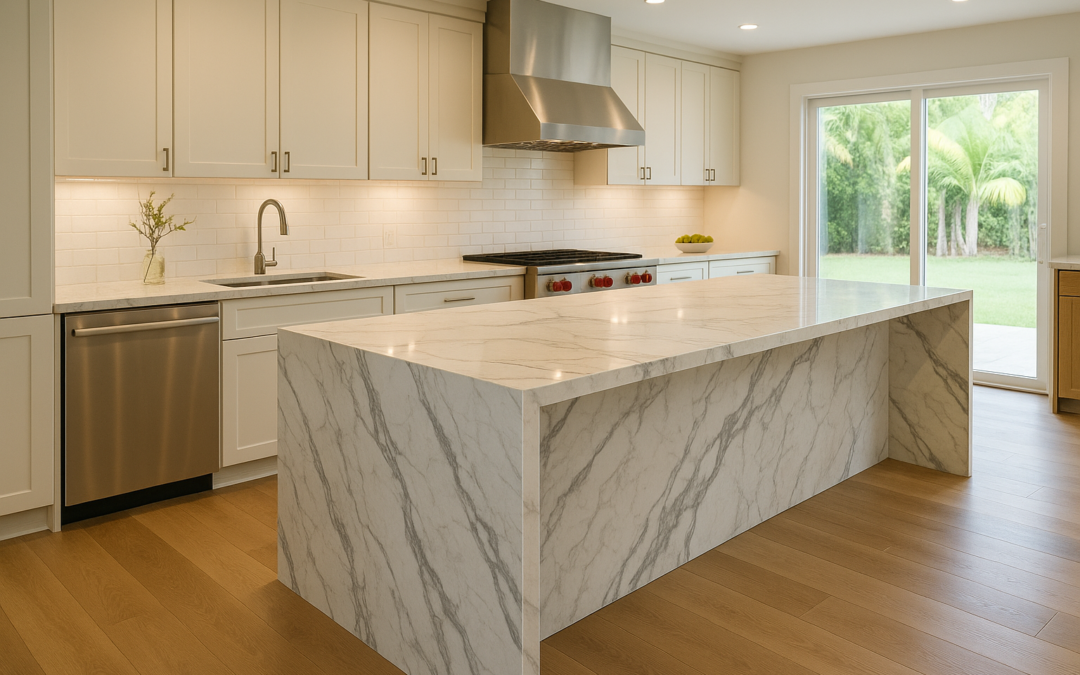
A standard island countertop stops at the top surface, often with an overhang for seating. A waterfall island continues the stone down one or both exposed ends, forming a vertical panel that reaches the floor or the base of the cabinetry. This detail creates a wrapped effect that emphasizes the beauty of the slab and gives the island a more sculptural presence.
In many kitchen island stone design projects in Tampa, a waterfall edge is used to visually anchor the room. It can make a large island feel intentional in an open layout, especially when the kitchen connects directly to the living or dining area. It also helps showcase premium natural stone or quartz patterns in a way that a traditional top alone cannot.
Depending on the layout, homeowners may choose:
- Single-sided waterfall: one exposed end drops to the floor
- Double-sided waterfall: both ends are wrapped in stone for a symmetrical look
- Mitered waterfall: the horizontal and vertical pieces meet at a crisp seam designed to preserve the appearance of thickness and pattern flow
The result is sleek and high impact, but it also requires more material, more fabrication planning, and more installation expertise than a conventional island top.
Why Waterfall Edges Are Popular in Tampa, FL Kitchens
Many Tampa-area kitchens favor bright interiors, open floor plans, and a blend of modern and transitional design. A waterfall edge countertop in Tampa, FL fits naturally into that environment because it adds visual structure without requiring ornate detailing. In a white kitchen, it can introduce contrast and movement. In a warmer or more textured kitchen, it can bring a sense of refinement and balance.
Waterfall islands are especially effective when:
- The island is visible from adjacent rooms
- The slab has attractive veining or movement worth highlighting
- The design calls for a modern or upscale transitional focal point
- The exposed island ends would otherwise look plain or bulky
- The kitchen needs a stronger visual centerpiece
In homes with abundant natural light, stone surfaces can become a major design feature throughout the day. The way sunlight hits polished or honed material can emphasize veining, color variation, and edge lines, making the island feel even more dramatic.
Best Stone Materials for Waterfall Island Countertops
Not every countertop material performs or looks the same in a waterfall application. The best choice depends on the design style, desired maintenance level, budget priorities, and how much the island will be used for cooking, entertaining, and family traffic.
Quartz
Quartz is one of the most popular choices for modern kitchen countertops in Tampa, FL because it offers a consistent appearance, strong durability, and relatively low maintenance. For waterfall islands, quartz works particularly well when homeowners want a clean, contemporary look.
Advantages of quartz for waterfall islands:
- Non-porous surface that does not require sealing
- Reliable pattern consistency, which can simplify design planning
- Wide range of colors from solid tones to marble-inspired veining
- Good resistance to staining under normal kitchen use

Design considerations:
- Some quartz patterns are printed or engineered to mimic natural stone, so the realism can vary by product
- Bookmatching and vein continuation may be more limited depending on the slab style
- Very bright white quartz can show contrast with darker seams or shadows at mitered edges if fabrication is not carefully done
Quartz is often a strong fit for households that want the waterfall look with less ongoing maintenance than some natural stones.
Granite
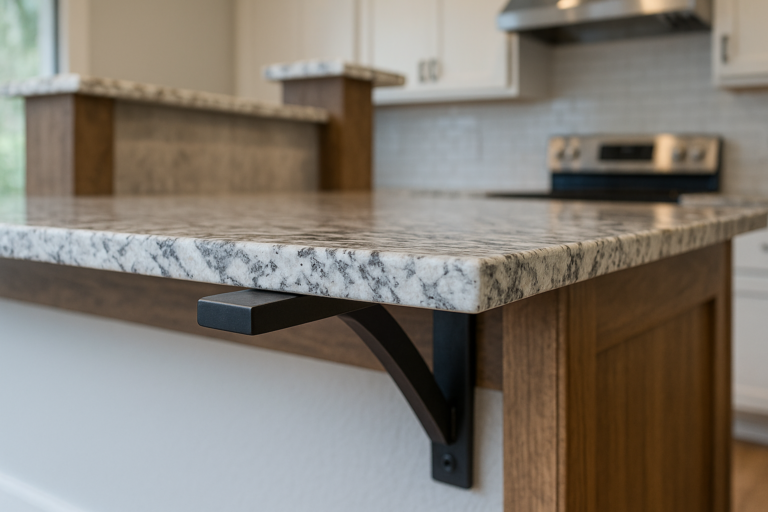
Granite remains a practical and attractive option for waterfall island applications, particularly for homeowners who prefer natural stone with unique variation. Many granites bring depth, mineral movement, and durability that hold up well in active kitchens.
Advantages of granite:
- Natural beauty with one-of-a-kind patterning
- Strong resistance to heat and everyday wear
- Suitable for a wide range of kitchen styles, from transitional to contemporary
- Often available in dramatic colors and movement that create a statement island
Design considerations:
- Granite pattern variation can make seam planning more complex
- Some busier granites do not create the sleek, uninterrupted visual effect many homeowners expect from a waterfall edge
- Periodic sealing may be recommended depending on the stone
Granite can be a great choice when the goal is durability and natural character rather than an ultra-minimal aesthetic.
Marble
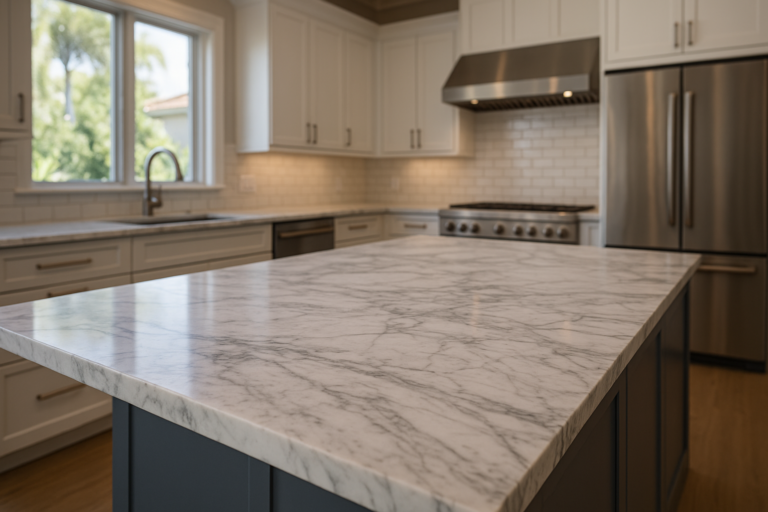
Marble delivers a luxurious, timeless appearance that many people associate with high-end kitchen design. On a waterfall island, marble can look especially striking because the veining becomes a major visual element on both the horizontal and vertical surfaces.
Advantages of marble:
- Elegant veining and classic visual appeal
- Excellent for creating a dramatic focal point
- Works well in bright kitchens seeking a soft, sophisticated feel
Design considerations:
- Marble is softer and more prone to etching and scratching than quartz or granite
- Acidic spills can affect the finish
- Maintenance expectations should be realistic in busy family kitchens
Marble is often best for homeowners who prioritize natural beauty and understand the patina that can develop over time.
Quartzite
Quartzite is a natural stone often chosen by people who want the elegance of marble-like veining with greater durability. In waterfall island applications, quartzite can offer the best of both worlds: dramatic visual movement and strong performance.
Advantages of quartzite:
- Distinctive natural appearance
- Generally harder than marble
- Well suited for statement islands with bold veining
Design considerations:
- Availability and appearance can vary significantly by slab
- Fabrication can be more demanding due to stone hardness
- Sealing may still be recommended depending on the material
For homeowners seeking a standout natural stone centerpiece, quartzite is often worth serious consideration.
How Stone Pattern Affects the Final Look
When selecting material for waterfall island countertops in Tampa, FL, pattern direction matters almost as much as color. The most visually impressive waterfall islands usually rely on thoughtful slab planning so that veining appears to flow from the top down the side. This is often achieved with a mitered edge and careful cutting from the same slab section.
Here are a few common visual approaches:
- Continuous veining: dramatic and high-end, especially with marble-look quartz, marble, or quartzite
- Subtle movement: cleaner and less busy, often ideal for contemporary spaces
- Bold contrast: dark stone against light cabinetry for a strong architectural statement
- Soft tonal palette: warm whites, grays, or taupes for a more relaxed upscale look
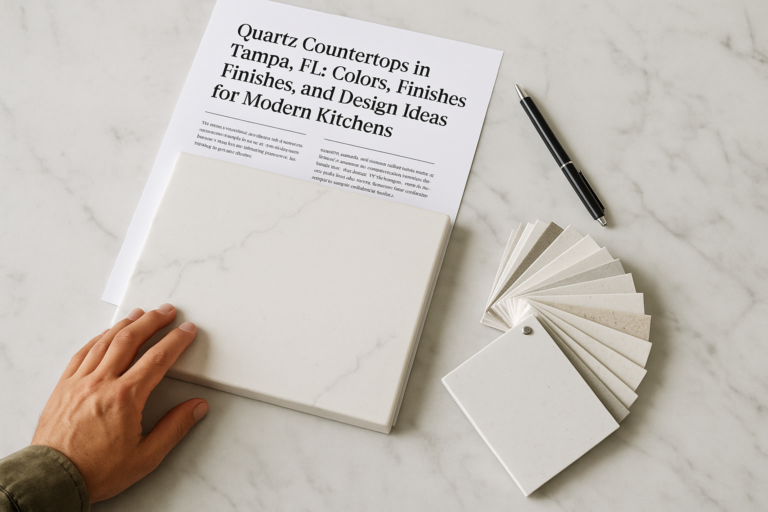
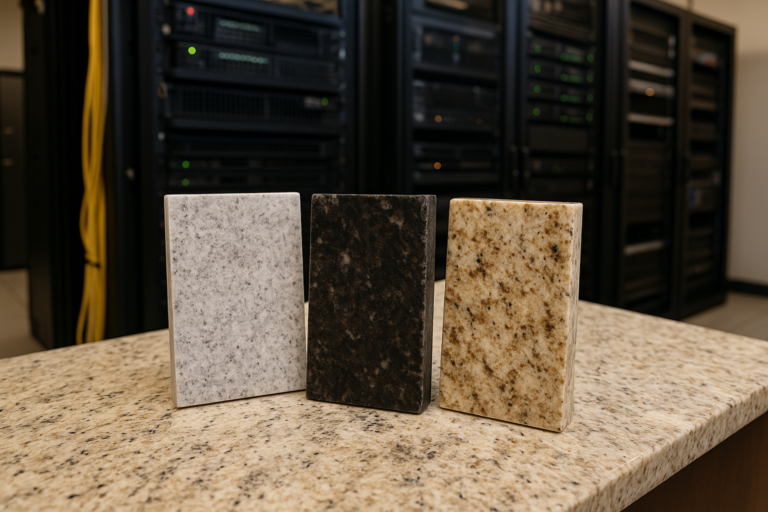
Homeowners should review the actual slab layout whenever possible rather than relying only on a small sample. Small samples rarely show how the stone will read on a full waterfall panel.
Design Tradeoffs to Consider Before Choosing a Waterfall Island
A waterfall island can be beautiful, but it also involves practical compromises. Understanding these tradeoffs early helps homeowners make better decisions and avoid surprises.
Cost and Material Usage
One of the biggest tradeoffs is material usage. Because the stone continues down the sides, a waterfall design requires additional slab area compared to a standard island top. More material often means higher costs for both the slab and fabrication. If the design uses double waterfalls or a heavily veined stone that requires careful pattern alignment, costs can rise further.
Style Compatibility
Waterfall edges are often associated with modern design, but they can also work in transitional kitchens when balanced with warmer cabinetry, softer finishes, or traditional accents. In very ornate or rustic kitchens, however, the crisp geometry of a waterfall edge may feel out of place. The island should complement the architecture of the home rather than compete with it.
Seating and Legroom
In some layouts, the waterfall panel can affect seating comfort or change how open the island feels. If stools are placed near the wrapped end, the vertical stone may visually or physically reduce openness. This does not always create a problem, but it should be considered in islands designed for family meals or entertaining.
Impact Resistance on Corners
The bottom and outer corners of a waterfall panel may be more vulnerable to chips from foot traffic, chairs, toys, or dropped items than the edge of a standard countertop. Material choice, edge profile, and household activity level all influence durability.
Cleaning and Maintenance Expectations
While waterfall panels can protect exposed cabinet ends, they also create more visible stone surface area. Smudges, dust near the floor, and marks from shoes or bags may be more noticeable on certain finishes or darker colors. Highly polished surfaces tend to highlight reflections, while honed finishes can soften the look.
Important Installation Considerations
Even the best slab can disappoint if installation details are not handled correctly. Waterfall islands depend heavily on precision because the feature draws the eye directly to the seams, alignment, and edge quality.
Mitered Edges and Seam Quality
Most waterfall designs use mitered edges, where the countertop and vertical panel are cut at matching angles to form a sharp corner. This technique preserves the visual thickness of the slab and can help the veining appear continuous.
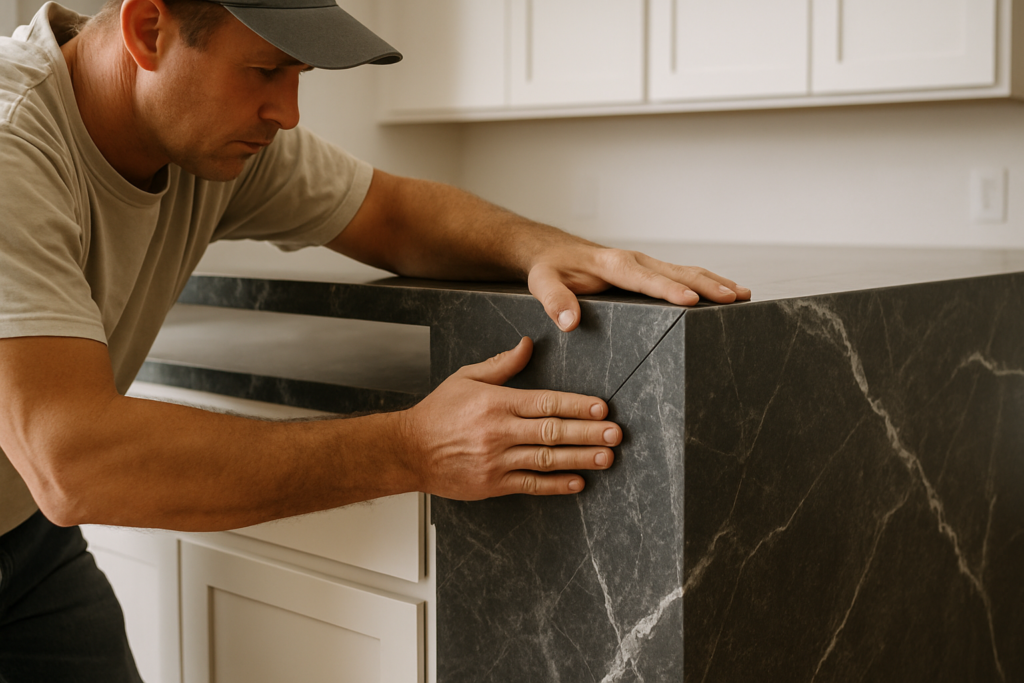
Because the corner seam is a focal point, precision matters. Poor seam placement, uneven alignment, or noticeable adhesive color mismatch can undermine the whole design. Clean fabrication and careful installation are essential to achieving the seamless look homeowners expect.
Cabinet and Floor Support
Stone is heavy, and waterfall panels need appropriate structural support. The cabinetry beneath the island must be level and properly built, and the floor conditions should also be evaluated. If the floor is uneven, the vertical panel may not sit correctly, which can affect the seam, alignment, and long-term stability.
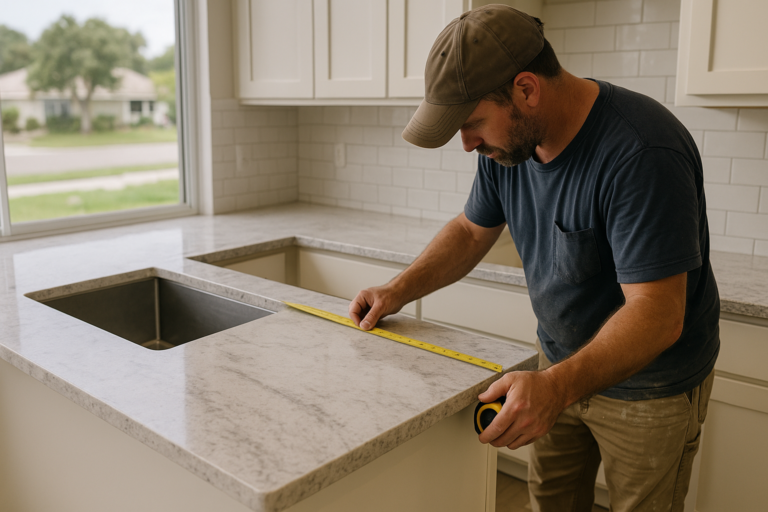
Installers often need accurate field measurements after cabinets are in place. Rushing the template process before the space is truly ready can create costly fit issues later.
Appliance and Outlet Planning
Island design should account for outlets, appliance garages, seating zones, and any end-panel access needs before fabrication begins. Once the stone panel is installed, changing nearby elements can be more difficult. Early planning helps avoid awkward placements or code-related revisions.
Slab Handling and Access
Large waterfall panels can be challenging to transport and maneuver, especially in remodels with tight entries, stairs, or limited workspace. Installers must consider the size and weight of the stone pieces as part of the fabrication strategy. In some kitchens, this may affect seam placement or require adjustments to the design.
Finish Selection
Polished, honed, and leathered finishes all create different effects. A polished finish reflects light and emphasizes veining for a more formal look. A honed finish feels softer and more understated. Textured finishes can add character but may shift the style away from the sleek appearance many homeowners want from a waterfall feature.
Finish also affects maintenance perception. Fingerprints, water spots, and everyday marks can show differently depending on the material and sheen level.
Choosing the Right Waterfall Style for Your Kitchen
There is no single best approach for every home in Tampa. The most successful kitchen island stone design in Tampa depends on balancing aesthetics with how the kitchen actually functions.
A few examples:
- Contemporary kitchen: white or light gray quartz with subtle veining, double waterfall ends, flat-panel cabinetry, and minimal hardware
- Transitional kitchen: quartzite or granite with moderate movement, a single waterfall on the most visible end, and warmer cabinet tones
- Luxury statement kitchen: bold-veined marble or quartzite with carefully matched veining and integrated lighting that highlights the slab
- Family-focused kitchen: durable quartz or granite selected for lower maintenance and resistance to everyday wear
The right design is often less about chasing a trend and more about choosing a configuration that fits the room, the household, and the material honestly.
When a Waterfall Island May Not Be the Best Choice
Although waterfall edges are visually striking, there are situations where another island design may make more sense. In a smaller kitchen, the added stone mass can feel heavy if the room lacks enough visual breathing space. In highly traditional kitchens, a furniture-style island with decorative legs or panel detailing may better suit the architecture. And when budget priorities are focused on maximizing perimeter countertop space or upgrading appliances, the added cost of wrapping the island may not deliver the best overall value.
Some homeowners also prefer a standard overhang with visible end panels if they want a lighter, more casual feel. The best kitchen designs are cohesive, not formulaic.
Conclusion
A waterfall island can be one of the most impressive features in a kitchen, especially when the stone, layout, and fabrication details all work together. For homeowners considering waterfall edge countertops in Tampa, FL, the key is to look beyond the trend and evaluate the full picture: material performance, style compatibility, slab pattern, structural support, seam quality, and daily use.
Quartz offers low-maintenance consistency, granite brings natural durability and character, marble delivers timeless elegance, and quartzite combines drama with strength. Each can work beautifully when matched to the right kitchen and installed with precision. Whether the goal is a sleek contemporary centerpiece or a refined transitional focal point, thoughtful planning is what turns a waterfall island from a design idea into a lasting architectural feature.
In the end, the most successful modern kitchen countertops in Tampa, FL are not just visually impressive. They are carefully chosen to suit the way the space looks, feels, and functions every day.