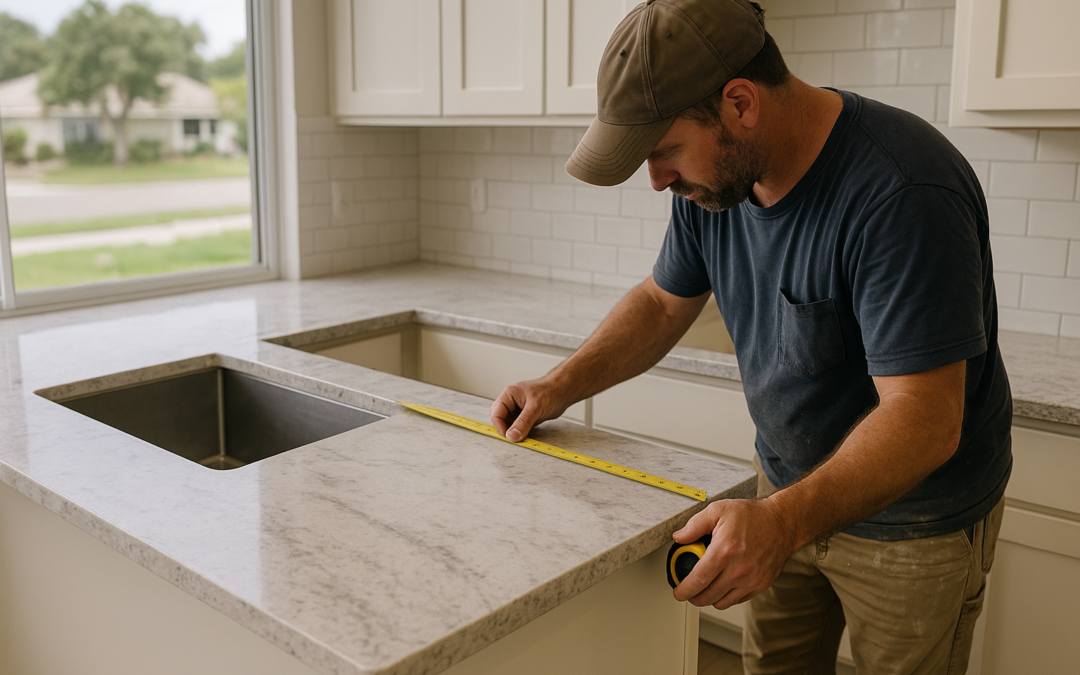
When planning a kitchen, bathroom, or laundry room upgrade, one of the most common questions homeowners ask is: how long do countertops take in Tampa? The answer depends on several moving parts, including material selection, cabinet readiness, sink details, edge profiles, cutouts, scheduling, and the complexity of the layout.
For most projects, the custom countertop project timeline in Tampa, FL follows a predictable sequence: measurements and templating, fabrication, then installation. While every job is different, understanding the countertop installation timeline in Tampa, FL can help you plan around cabinet work, plumbing, appliance delivery, and daily household routines.
This guide explains what usually happens during each phase, what can speed things up or slow them down, and how to prepare so your project stays on track.
What a Typical Countertop Timeline Looks Like
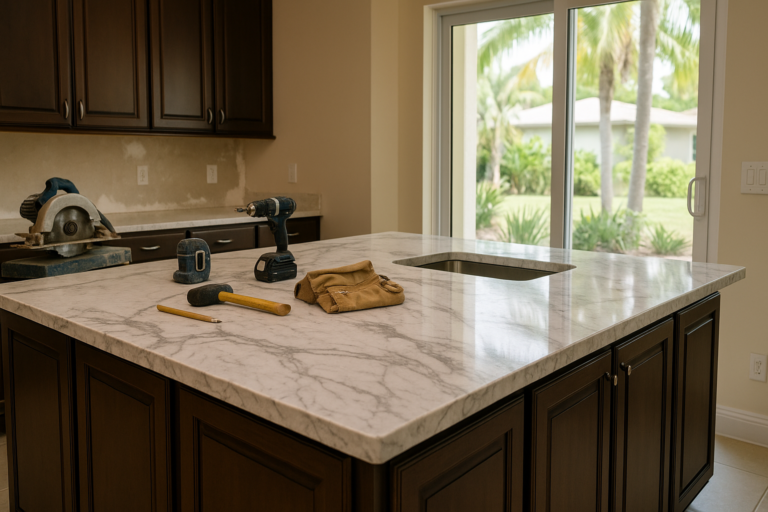
In many residential remodeling projects, countertops are one of the final major elements to go in. That is because the finished measurements depend on installed and level base cabinets. Once cabinets are secure and other site conditions are ready, the templating and fabrication process in Tampa, FL can begin.
A typical schedule often looks something like this:
- Material selection and project coordination: timing varies based on design decisions and slab availability
- Templating: often scheduled after cabinets are installed and finalized
- Fabrication: commonly takes several business days to a couple of weeks depending on scope and shop capacity
- Installation: usually completed in one day for many standard residential jobs, though larger or more complex projects can take longer
- Final plumbing hookup: often occurs after countertop installation, especially once sinks and faucet openings are ready
Although homeowners often focus on installation day, most of the time in a countertop project actually happens before the slabs ever reach the home. Careful measurements, shop drawings, cutting, finishing, polishing, and quality checks are what make a precise final fit possible.
Stage 1: Before the Clock Really Starts
One reason homeowners get mixed answers about the custom countertop project timeline in Tampa, FL is that the timeline can be measured in two different ways. Some people count from the day they first visit a showroom or choose a stone. Others count from the day the template is created. These are not the same thing.
Before templating can happen, a few key conditions usually need to be in place:
- Base cabinets must be fully installed
- Cabinets should be secured and level
- The countertop layout should be finalized
- Sink type should be selected
- Appliance specifications should be available if they affect cutouts
- Backsplash or wall conditions should be discussed if relevant
- Material should be chosen and available
If any of those items are still in flux, the project may pause before formal production begins. For example, changing from a drop-in sink to an undermount sink can affect cutouts and reveal details. Waiting on a cooktop model number can delay a precise opening. If cabinets shift after measurements are taken, the template may need to be revised.
That is why experienced remodelers usually treat countertops as a coordinated finish stage rather than a stand-alone task.
Stage 2: Templating Usually Comes After Cabinets Are Ready
Templating is the measurement phase that converts your actual cabinet layout into the dimensions used for fabrication. In the templating and fabrication process in Tampa, FL, this step is critical because even minor field variations matter. Walls are rarely perfectly square, and cabinet runs can vary slightly from one end to the other.
How long templating takes
The on-site visit itself is often relatively quick for a straightforward kitchen or bathroom. Many standard jobs can be measured in a few hours or less, while large kitchens, multiple rooms, waterfall edges, full-height backsplashes, or complicated seam planning may take longer. The scheduling of the template appointment, however, depends on installer availability and whether the site is truly ready.
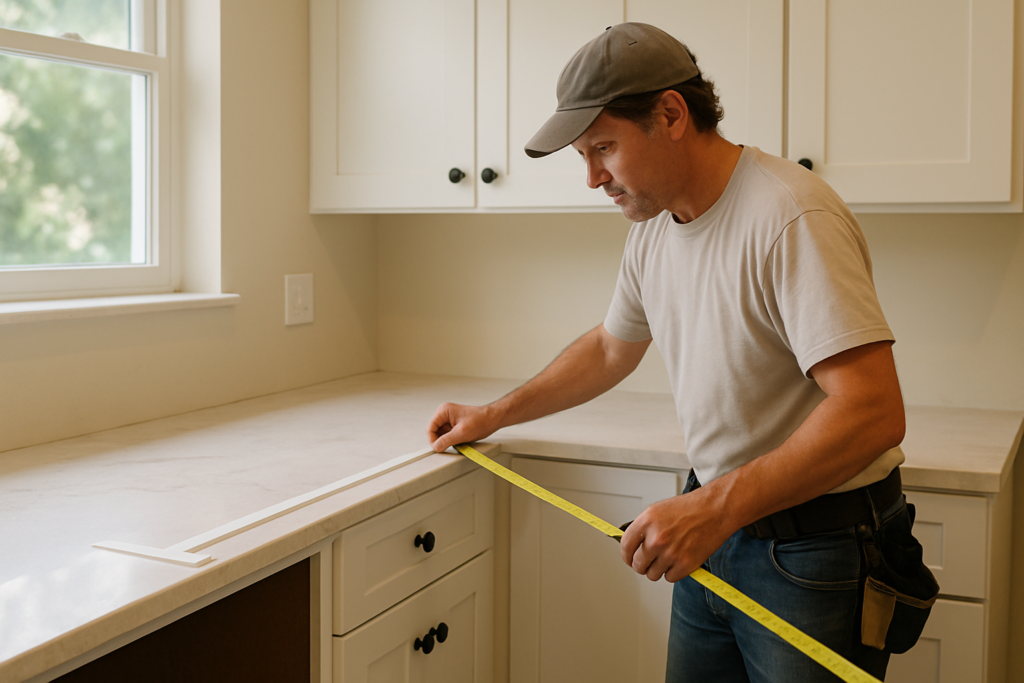
In practical terms, homeowners should think about templating in two parts:
- Scheduling the appointment: this may take a few days depending on the shop’s calendar
- Completing the field measurements: often done in a single visit once conditions are ready
After the site visit, the information typically goes back to the shop for final review, digital layout work, and approval before fabrication begins.
What happens during templating
During templating, the technician may confirm dimensions, overhangs, edge details, sink location, seam placement, backsplash needs, and cutouts for fixtures or appliances. Digital measuring systems are common, but physical verification and project coordination still matter. Templating is not just about size; it is about translating design intent into fabrication-ready information.
This is also when the real-world conditions of the room become clear. For example:
- A wall may bow slightly, affecting how the countertop meets the surface
- An island overhang may need support considerations
- A sink base may require confirmation for fit
- A narrow passage may affect how large countertop sections can be moved into the home
These details can influence both fabrication planning and installation day logistics.
Stage 3: Fabrication Is Often the Longest Phase
If you are asking about the countertop installation timeline in Tampa, FL, fabrication is often where the most time is spent. This is the shop phase where the slab or material is transformed into finished countertop pieces.
How long fabrication usually takes
For many custom residential jobs, fabrication may take several business days to a couple of weeks after final templating approval. Straightforward projects may move faster, while more complex work can take longer. The exact timing depends on the shop schedule, material type, project complexity, and whether special details are required.
Common factors that affect fabrication time include:
- Material: natural stone, quartz, and other surfaces can have different handling and finishing requirements
- Edge profile: simple eased edges are usually more straightforward than ornate profiles
- Cutouts: sinks, cooktops, faucets, soap dispensers, and specialty fixtures add work
- Seam planning: larger layouts may need careful pattern matching and structural planning
- Backsplashes: separate fabrication may be needed for short splashes or full-height applications
- Waterfall ends: these require precision, layout attention, and careful finishing
- Slab availability: if a selected slab is delayed or changed, the schedule can shift
What happens during fabrication
Fabrication usually involves reviewing the template, laying out the parts on the slab, cutting, polishing edges, creating cutouts, finishing sink areas, labeling pieces, and preparing them for transport and installation. In many projects, the shop also performs quality checks before release.
This stage is where craftsmanship and planning come together. If the countertop has dramatic veining or movement, layout decisions may be especially important so the final appearance looks intentional across seams, islands, and vertical pieces.
Because fabrication is done off-site, homeowners sometimes assume nothing is happening while they wait. In reality, this phase can be the most technically demanding part of the process.
Stage 4: Installation Is Fast Compared to the Prep Work
Installation day is the part homeowners look forward to most, and in many cases it is the shortest major stage. For a standard kitchen or bath, installation may often be completed in one day. Larger homes, multiple rooms, oversized islands, intricate seam work, or heavy specialty pieces can require more time.
What to expect on installation day
Installers typically deliver the fabricated pieces, dry-fit them, make any necessary final adjustments, set the countertops, secure seams, and verify alignment. If backsplashes are included in the same visit, those may be installed as well. Once the surfaces are in place, the team may apply seam material and adhesives or setting materials as needed.
Even if installation itself is efficient, homeowners should expect some temporary disruption. Work areas need to be clear, access paths need to be open, and crew members may be moving large heavy pieces through the home. Kitchens are often out of service during this time.
Why some installations take longer
Several issues can make installation more time-consuming:
- Tight access into the home
- Very large or delicate slab sections
- Multiple seam locations
- Uneven walls requiring careful scribing or adjustment
- Full-height splash pieces that need precise placement
- Coordination with sinks, brackets, or supports
Although most homeowners focus on the date itself, a successful installation usually reflects the quality of the earlier templating and fabrication work.
After Installation: What Still Needs to Happen
Many countertop projects are not fully finished the moment the stone is set. Depending on the scope, there may still be a few final steps:
- Plumbers may need to reconnect sinks, faucets, and disposals
- Cooktops or appliances may need to be set in place
- Sealant or adhesive cure times may need to be respected where applicable
- Touch-up caulking may be completed around wall transitions or backsplash areas
For homeowners trying to estimate how long do countertops take in Tampa, it is helpful to think beyond slab installation alone. Your kitchen may look nearly complete that day, but final functional use can depend on post-installation trade coordination.
What Can Delay a Countertop Project in Tampa, FL
Even well-organized projects can experience timing changes. Understanding likely causes of delay can help you build a more realistic plan.
Cabinet issues
If cabinets are not installed, not level, or still likely to shift, templating may need to be postponed. Countertops rely on the finished cabinet layout, so this is one of the most common timeline bottlenecks.
Material changes
Switching materials after measurements, changing slab selections, or waiting for a specific pattern can affect the schedule. Natural materials may also require layout review before fabrication proceeds.
Design changes after templating
Changes to sink size, edge profile, overhang, backsplash height, or appliance specifications after the template is complete can trigger revisions and add time.

Complex project details
Waterfall ends, mitered edges, large islands, unusual angles, integrated design features, and full-height splashes usually require more fabrication and planning than a simple straight run.
Scheduling coordination
Template appointments, fabrication slots, and installation windows all depend on availability. During busy remodeling seasons, wait times may be longer than expected.
Access limitations
If the home has narrow doorways, tight turns, upper-floor access, or other delivery challenges, installers may need extra planning time or different piece sizing.
How to Keep Your Countertop Timeline on Track
If you want the templating and fabrication process in Tampa, FL to go smoothly, preparation matters. A few practical steps can reduce avoidable delays.
Finalize selections early
Choose the material, edge style, sink type, and major fixture details before templating. The fewer open decisions at measurement time, the easier it is to move into production.
Make sure cabinets are truly ready
Do not schedule the template too early. Cabinets should be permanently installed, properly aligned, and not expected to change.
Provide appliance and fixture specs
Accurate model information for sinks, cooktops, faucets, and specialty accessories helps prevent guesswork and reduces the risk of rework.
Clear communication matters
If you have strong preferences about seam placement, overhang depth, backsplash style, or slab layout, discuss them before fabrication begins. Addressing these points early is much easier than trying to revise finished material later.
Prepare the home for installation day
Clear walkways, protect nearby belongings, secure pets, and plan for limited kitchen or bathroom use while the crew is working. This helps the installation proceed safely and efficiently.
Examples of Real-World Timeline Differences
Two countertop jobs can have very different schedules even if they start in the same week.
Example 1: Simple vanity replacement
A bathroom vanity with one sink cutout, a standard edge, and a straightforward layout may move relatively quickly once the cabinet is ready. Templating is simple, fabrication is limited, and installation may be brief.
Example 2: Large kitchen with island and waterfall
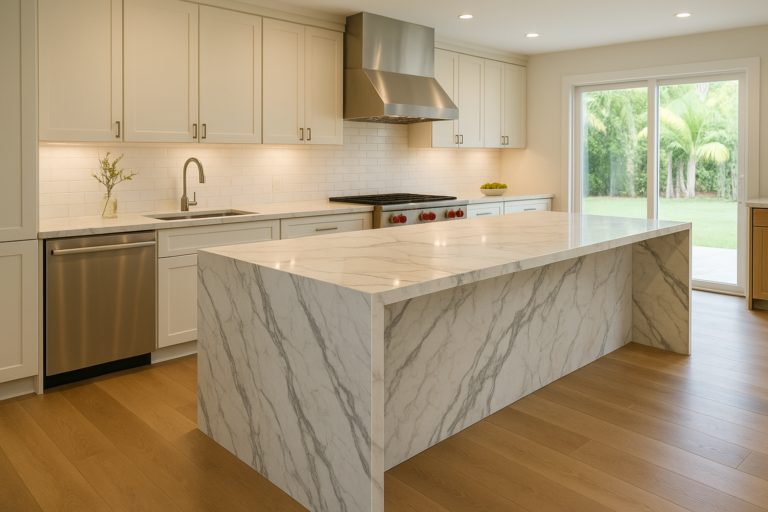
A kitchen with perimeter counters, an oversized island, a cooktop opening, an undermount sink, full-height splash, and waterfall ends will usually take longer. There are more measurements, more layout decisions, more fabrication labor, and more delivery coordination.
Both are custom projects, but the second naturally demands more shop time and installation planning.
Why Homeowners Should Expect a Custom Process
Countertops are not typically an off-the-shelf item, especially when stone or engineered surfaces are involved. Each layout is based on the actual room, actual cabinets, and actual selected material. That is why the custom countertop project timeline in Tampa, FL includes distinct stages rather than a single installation appointment.
This custom approach has important advantages. It allows the finished counters to fit the room correctly, supports better seam planning, accommodates fixture selections, and creates a more polished final result. While homeowners naturally want the project completed quickly, accuracy usually matters more than rushing the process.
Planning Around Your Remodel Schedule
If your larger remodel includes flooring, painting, backsplash tile, appliance delivery, or plumbing changes, countertop timing should be coordinated with those trades. In many cases:
- Cabinets come before countertops
- Countertops come before final sink and faucet hookup
- Tile backsplash work may happen after countertop installation unless a stone splash is part of the countertop scope
- Final punch-list items often follow installation
Thinking through that sequence can help prevent scheduling conflicts and reduce downtime in the kitchen or bath.
Conclusion
For homeowners researching the countertop installation timeline in Tampa, FL, the key takeaway is that the process usually moves through three major stages: templating, fabrication, and installation. Templating often happens once cabinets are complete and stable. Fabrication usually takes the most time because it involves precise cutting, finishing, and preparation. Installation is often the fastest major phase, though final plumbing and finishing details may continue afterward.
If you have been wondering how long do countertops take in Tampa, the most realistic answer is that standard projects can move efficiently when selections are finalized, cabinets are ready, and coordination is handled well. More complex layouts, specialty features, and mid-project changes can extend the schedule. By understanding the templating and fabrication process in Tampa, FL before work begins, homeowners can plan more confidently and reduce surprises throughout the remodel.