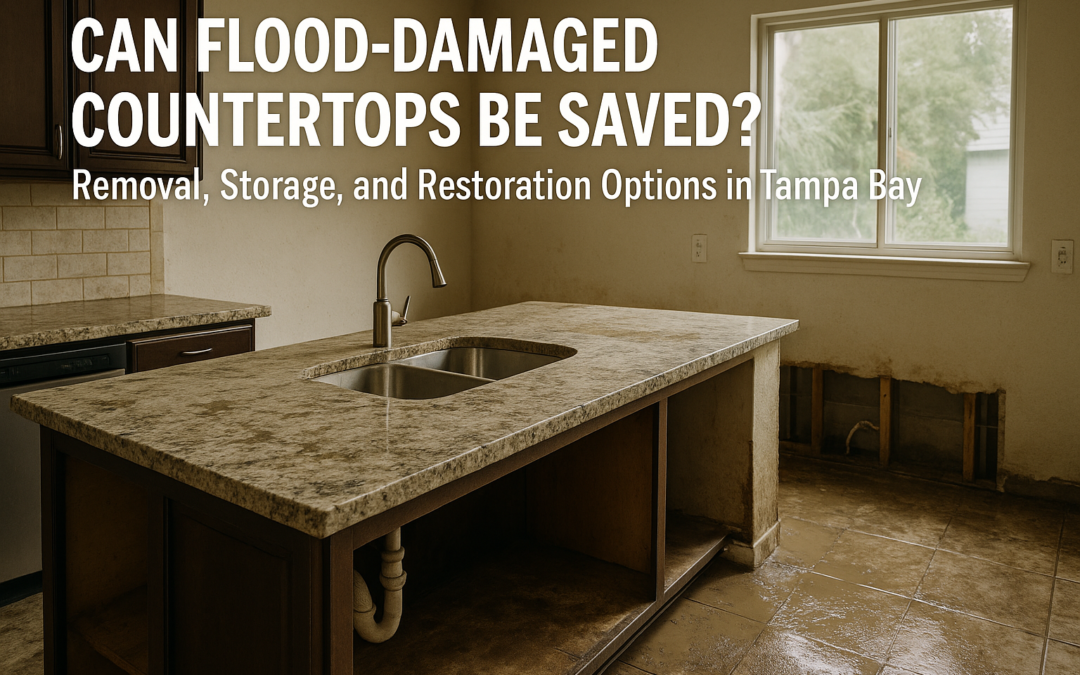
Flooding can turn a beautiful kitchen or bathroom into a difficult cleanup project in a matter of hours. In Tampa Bay, heavy rain, storm surge, plumbing failures, and hurricanes can leave homeowners wondering whether their countertops are a total loss or whether they can be saved. The answer depends on the countertop material, how long the water was present, whether cabinets and supports were compromised, and how safely the surfaces can be removed and stored during repairs.
For many property owners, the biggest mistake is assuming every flood-damaged top has to be discarded immediately. In some cases, natural stone can be removed, cleaned, dried, and reinstalled after the rest of the room is rebuilt. In other situations, water exposure leads to hidden damage in seams, substrate materials, cabinetry, and wall framing that makes replacement the safer choice. Understanding the difference can help you make better decisions, protect valuable materials, and avoid unnecessary loss.
This guide explains what to consider when planning flood damaged countertop removal Tampa Bay property owners may face after severe weather. It also covers countertop storage after hurricane events, material-specific restoration concerns, and when it may be possible to save granite countertops after flood exposure.
Why Flood Damage Affects More Than the Surface
Countertops often look solid and unaffected at first glance, especially stone surfaces such as granite, marble, or quartz. But flood damage rarely stops at what you can see. Water typically affects the entire countertop system, including:
- Cabinets and support frames below the slab
- Plywood or particleboard sub-tops
- Adhesives, silicone, and seam materials
- Backsplashes and wall connections
- Plumbing penetrations around sinks and faucets
- Appliances attached to surrounding cabinetry
Even if the countertop itself appears intact, saturation below the slab can cause instability, swelling, mold concerns, and stress points during removal. A stone top that survived the flood may still crack later if the supporting structure has shifted or weakened. That is why any restoration plan should evaluate both the visible finish and the hidden support system.
First Steps After a Flood in a Kitchen or Bathroom
Before making decisions about salvage or replacement, homeowners should focus on safety and documentation. Flooded interiors can contain contaminated water, electrical hazards, and unstable materials.
Prioritize safety
If water reached outlets, appliances, or wiring, wait for the area to be cleared by the appropriate professionals before entering. Floodwater may also carry bacteria, chemicals, or debris, especially after storm surge or neighborhood flooding.
Document the damage
Take detailed photos and videos of the countertops, cabinetry, backsplashes, flooring, and surrounding walls before demolition begins. This helps with insurance records, contractor planning, and deciding whether removal for storage is worth attempting.
Dry the area as quickly as possible
Prompt drying is important even when full repair work cannot begin immediately. Dehumidification and airflow can reduce additional damage to stone supports, seams, and nearby finishes.
Avoid DIY removal of heavy slabs
Stone countertops are extremely heavy and can crack if lifted improperly. Flood-damaged cabinets may also collapse during an amateur removal attempt. Professional handling is important when the goal is preservation.
Can Flood-Damaged Countertops Be Saved?
Sometimes yes, but not always. Whether a countertop can be saved depends on the material and the extent of damage around it.
Natural stone countertops
Granite, marble, and other natural stone surfaces are often the best candidates for salvage because the stone itself is relatively durable. If the slab has not cracked and the contamination can be addressed, removal and storage may be practical. However, porous stones can absorb staining agents or contaminants, and polished finishes may still need professional refinishing after cleanup.
Quartz countertops
Quartz is nonporous compared with many natural stones, but it is still part of an installed system that includes seams, adhesives, sink cutouts, and cabinetry. If the cabinets are ruined but the quartz slab remains structurally sound, removal may be possible. The key issue is whether the slab can be detached without breakage and whether any bonding materials were compromised.
Laminate countertops
Laminate is usually more difficult to save after flooding. Water can penetrate seams and edges, causing the particleboard or wood substrate beneath to swell, warp, or delaminate. Even if the top still looks acceptable, internal swelling often makes reuse impractical.
Solid surface countertops
Some solid surface materials may be salvageable depending on how they were installed and whether they suffered distortion or seam damage. Their performance after flooding varies based on the amount of water exposure and the condition of the supporting cabinets.
How Water Exposure Changes the Salvage Decision
One of the most important factors is not just whether the countertop got wet, but how it got wet.
Clean water exposure
A countertop affected by a supply-line leak or appliance overflow may have a better chance of being saved if the water was relatively clean and addressed quickly. The main concerns are structural support damage, staining, and trapped moisture.
Storm or floodwater exposure
Stormwater, rising floodwater, and hurricane-related flooding raise additional concerns. This kind of water may carry mud, sewage, chemicals, and organic contamination. In these cases, even if the slab itself remains intact, the cleanup process must be more thorough, and nearby porous materials often need removal.
Duration of saturation
The longer water remains in contact with cabinetry and substrates, the less likely it is that the entire installation can be preserved. Extended saturation can weaken glue bonds, swell wood materials, create odors, and promote mold growth.
When Removal Makes Sense
Countertop removal may be the best choice when the slab is valuable and the room below it requires major reconstruction. This is often the case after hurricanes in Tampa, St. Petersburg, Clearwater, and nearby coastal communities where lower cabinets, drywall, and flooring may all need to be replaced.
Situations where removal may be worth considering include:
- The stone slab is intact and not visibly cracked
- The cabinetry below is damaged and must be replaced
- The countertop material is high quality and expensive to replace
- The layout of the room will stay substantially the same
- The slab can be detached with a reasonable chance of preserving it
In these situations, planning countertop removal St Petersburg FL and greater Tampa Bay homeowners may need can help preserve materials while allowing restoration crews to dry and rebuild the room properly.
Important Risks During Countertop Removal
Removing a flood-damaged countertop is not simply a demolition step. It is a preservation process that requires careful sequencing.
Hidden stress in the slab
Stone may already be under tension if the cabinets below shifted during flooding. A slab that looked fine in place can crack when lifted if weight is not supported evenly.
Weak sink cutouts
Areas around sinks, cooktops, and narrow spans are particularly fragile. If sink bases or sub-tops absorbed water and failed, those cutout sections may be at greater risk during removal.
Backsplash attachment points
Backsplashes adhered to wet walls can break during detachment. In some cases the main countertop can be saved while the backsplash cannot.
Contamination control
If floodwater was contaminated, removal crews must handle mud, debris, and potentially unsanitary residue carefully to avoid spreading it into cleaner parts of the property.
Countertop Storage After Hurricane Damage
Once a countertop is removed, proper storage becomes the next major issue. Countertop storage after hurricane damage is not as simple as laying a slab flat in a garage. Incorrect storage can cause cracks, warping stress, edge damage, and staining.
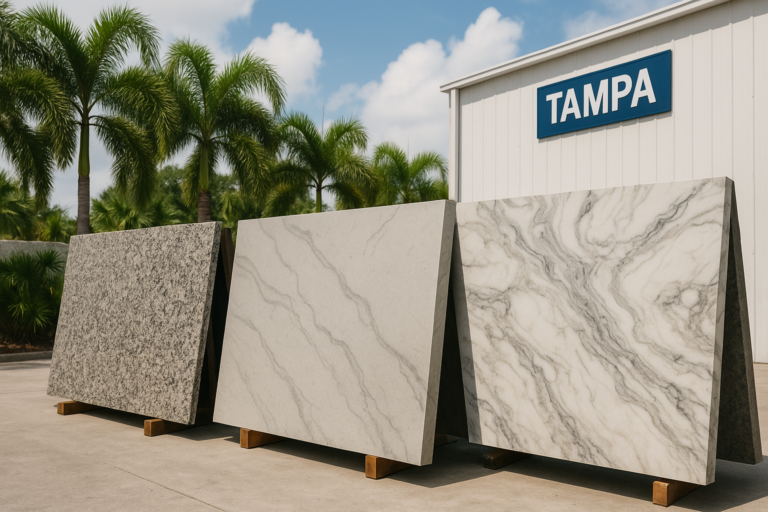
Store slabs upright with proper support
Stone slabs and removed countertop sections are typically stored vertically or at a slight angle on stable supports designed to distribute weight safely. Flat storage may create stress in unsupported areas.
Protect edges and finished surfaces
Finished edges, corners, and polished faces should be padded and shielded from impact. A small chip on a corner can become a larger restoration issue later.
Keep the storage area dry and stable
After a flood, it may be tempting to place materials wherever space is available. But damp sheds, exposed patios, or unstable jobsite conditions can create further damage. Countertops should be kept in a dry, sheltered environment away from standing water and heavy traffic.
Label each section clearly
If multiple pieces are removed, they should be labeled for orientation and future reinstallation. This matters for vein matching, seam alignment, sink cutouts, and edge placement.
Separate stone from damaged cabinetry
Even if cabinets are being stored temporarily for insurance review, they should not remain in direct contact with salvaged slabs. Wet wood, rusted hardware, and debris can stain or scratch the surfaces.
Can You Save Granite Countertops After Flood?
Homeowners often ask whether it is possible to save granite countertops after flood damage because granite is one of the most common premium kitchen surfaces. In many cases, yes, granite has a better chance of salvage than laminate or water-sensitive composite materials. But the answer still depends on the details.
Why granite can often be preserved
Granite is dense, durable, and generally less vulnerable to structural water damage than wood-based products. If the slab did not crack and the flood did not cause major staining or etching from contaminants, it may be suitable for cleaning, resealing if appropriate, and reinstalling.
What can still go wrong
Granite is not indestructible. Water may affect seam areas, sink attachments, rodding channels, and unsupported spans. Flood-damaged cabinetry can also place torque on the slab. In addition, muddy or contaminated water can leave residues that require professional cleaning rather than ordinary household products.
When granite may not be worth saving
If the granite cracked during the event, if the kitchen layout is changing significantly, or if the slab was installed in a way that makes safe removal unlikely, replacement may be the more practical path. Salvage should make sense structurally, financially, and logistically.
Restoration Options by Countertop Material
Granite
Granite may be cleaned, dried, inspected for cracks, and in some cases resealed after the surrounding space is restored. Chips or minor edge issues may sometimes be repairable depending on the location and severity.
Marble
Marble can sometimes be saved, but it is more sensitive than granite. Floodwater contamination, staining, and finish dulling may require more extensive refinishing. Careful evaluation is especially important if acidic substances were involved.
Quartz
Quartz can often survive water exposure, but restoration depends heavily on seam condition, cabinet failure below, and whether the slab can be removed cleanly. Harsh chemical cleaning should be avoided unless appropriate for the product.
Laminate
Laminate usually has poor salvage potential once swelling or delamination begins. The substrate is often the deciding factor, not the decorative top layer.
Solid surface
Some solid surface tops may be refinished if they remain structurally stable. However, the underlying support conditions still matter greatly.
Signs a Countertop Should Probably Be Replaced
Not every flood-damaged installation is a good candidate for restoration. Common signs replacement may be the better option include:
- Visible cracking through the slab
- Severe cabinet collapse or distortion below
- Swollen substrate materials under the countertop
- Persistent staining or contamination that cannot be safely resolved
- Major layout changes planned during rebuilding
- Multiple weak points around sink or cooktop openings
- Backsplash and wall conditions that make clean removal unlikely
Making a realistic decision early can prevent spending time and money trying to preserve a top that will not reinstall safely.
Practical Example: Kitchen Flood After a Hurricane
Consider a Tampa Bay home where stormwater entered the first floor during a hurricane. The lower cabinets absorbed water and began to swell, but the granite countertops remained visually intact. The flooring, drywall, and island base all required demolition.
In that kind of scenario, the granite may be a good candidate for careful removal and storage while the room is dried and rebuilt. The success of that plan depends on whether the slab can be detached without cracking, whether contaminated residue can be cleaned properly, and whether the rebuilt cabinetry will match the original support layout. Saving the countertop can sometimes preserve the look of the kitchen and reduce waste, even when most of the room must be reconstructed.
Practical Example: Bathroom Vanity With Extended Water Exposure
Now consider a bathroom vanity that sat in several inches of water for days after a storm. The countertop is laminate over particleboard, and the sink base is swollen and separating at the seams.
In this case, removal may still be necessary, but salvage is far less likely. The top may appear mostly intact from above, yet the core material beneath has probably absorbed water and lost structural integrity. Reinstallation would usually not be a dependable long-term solution.
Insurance, Reconstruction, and Timing Considerations
Countertop decisions often happen in the middle of a larger restoration timeline. Insurance documentation, water remediation, demolition, mold prevention, cabinet replacement, and final finish work all affect whether salvage is practical.
It is helpful to think about timing in three phases:
- Emergency response: Document damage, stabilize the property, and begin drying.
- Assessment and removal: Decide whether the countertop can be preserved and remove it before surrounding demolition creates additional risk.
- Storage and reinstallation planning: Protect the slab while the room is rebuilt and verify that the new supports match the countertop requirements.
If removal is delayed too long, deteriorating cabinets and moisture exposure may reduce the odds of successful preservation. On the other hand, rushed removal without proper planning can also damage a countertop that might otherwise have been saved.
Choosing the Most Practical Path in Tampa Bay
In coastal Florida, flood recovery decisions often have to be made quickly, especially after widespread storm events when contractors and storage space may be in high demand. The most practical path is usually the one that balances safety, material value, room design, and the condition of the support structure.
For homeowners in Tampa and the surrounding Tampa Bay area, a smart evaluation starts with the material itself but should never end there. A countertop is only as reliable as the cabinets, fasteners, walls, and installation details that support it. A durable granite slab may still be worth saving, while a waterlogged laminate top may not justify the effort. The goal is not simply to keep what you have, but to determine whether it can be restored and reinstalled safely for long-term use.
Conclusion
Flood-damaged countertops can sometimes be saved, but the right answer depends on material type, contamination level, cabinet damage, and removal conditions. Natural stone surfaces such as granite often offer the best chance of salvage when handled correctly, especially if the slabs remain intact and can be stored properly during reconstruction. In contrast, laminate and other water-sensitive systems are more likely to require replacement once swelling and delamination occur.
Whether you are considering flood damaged countertop removal Tampa Bay homeowners often need after severe weather, exploring countertop storage after hurricane cleanup, or trying to determine if you can save granite countertops after flood exposure, the key is careful evaluation and proper handling. With the right approach, some countertops can be preserved and reinstalled successfully after the rest of the space has been restored.